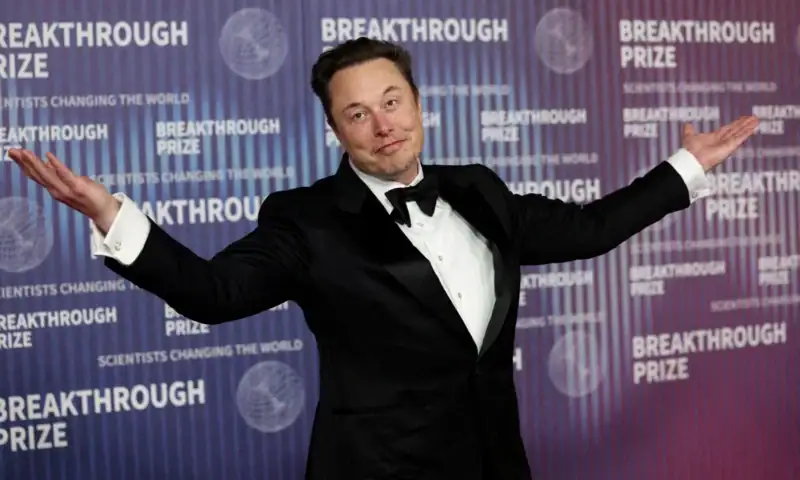
Elon Musk has become the world’s first trillionaire, crossing a historic financial milestone that underscores the rapid rise of his business empire. The landmark was reached after his aerospace and satellite firm, SpaceX, completed a record-breaking $75 billion Initial Public Offering (IPO), significantly boosting the valuation of Musk’s personal stake. Estimates based on recent financial filings place his net worth above $1 trillion, widening the gap between himself and other global billionaires.
The development has triggered massive engagement across digital platforms, with netizens offering highly polarized reactions to the sheer scale of the tycoon’s wealth. A significant portion of the online discourse has expressed sharp concern over the widening global wealth gap.
One prominent international non-profit organization commented that “Elon Musk’s rise to trillionaire status marks a new pinnacle of oligarchy,” reflecting a broader public anxiety regarding the concentration of extreme wealth in the hands of a single tech founder.
Conversely, supporters and market enthusiasts have praised the milestone as a validation of technological innovation. Many netizens defended the valuation, arguing that his companies are transforming multi-billion-pound global industries.
One social media user remarked that Musk “has repeatedly built companies that transformed entire industries,” while others noted that investors are simply backing a rare entrepreneur capable of turning ambitious frontier ideas into commercially successful realities.
The record-breaking IPO has firmly repositioned SpaceX as a dominant force on Wall Street, with its valuation soaring to $1.77 trillion ahead of its Nasdaq debut. While market critics continue to debate whether the astronomical valuation relies heavily on future expectations rather than current profits, the transaction cements Musk’s position as a central figure in global commerce and public policy.
Market observers note that this latest leap places the entrepreneur in an unprecedented economic category of his own.