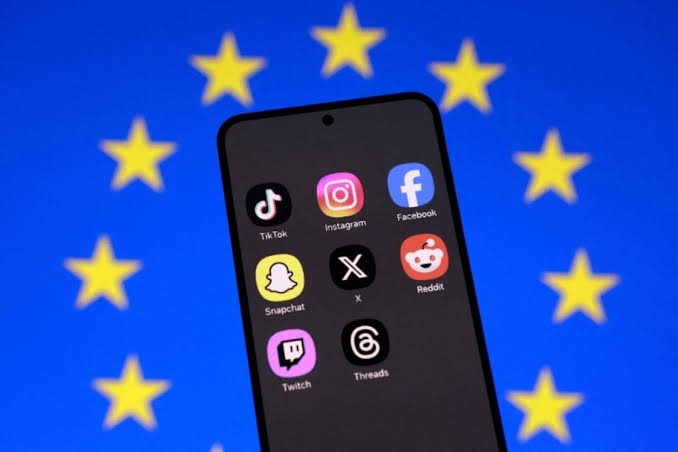
The European Union (EU) is set to propose restricting children under 15 from accessing social media, video-sharing platforms, AI chatbots and online games under a plan aimed at protecting children from online risks.
The proposal is part of an EU Kids Act that European Commission President Ursula von der Leyen and EU tech chief Henna Virkkunen are due to present on Thursday, according to a European Commission document seen by an international media outlet.
Von der Leyen may also announce some details of the upcoming policy in her State of the Union address on Wednesday.
The proposal will introduce different levels of access based on age, with requirements for technology companies varying according to the type of service and the age of the child.
Under the plan, children aged 15 and above would be able to create their own accounts. Those aged 13 and 14 could have introductory accounts for social media and video-sharing platforms if their parents open them, with parental controls, limited contacts and strict time limits.
Children aged between three and 12 will only be allowed to use accounts fully controlled by their parents and limited to child-friendly services that meet strict safety standards. Children under three will not be allowed to access the services covered by the proposal.
The European Commission said that the approach should allow children to benefit from digital services while limiting their exposure to abuse and exploitation.
The proposal would also impose new requirements on companies operating the platforms. They would have to avoid addictive designs and harmful feeds and provide children with tools to report harmful content.
Companies would also be required to offer effective parental control features.
Social media and video-sharing platforms would have to verify a user’s age when a new account is created. Online gaming platforms would be required to verify children’s age before allowing them to download games.
Companies would also have to pay a supervisory fee, which would be used to fund regulators responsible for enforcing and supervising the rules.
The proposal covers social media, video-sharing services, AI chatbots and online gaming platforms as concerns continue to grow over the impact of digital services on children’s health and safety, including platforms such as Facebook, Instagram, TikTok, YouTube and ChatGPT.
However, the details of the proposal could still change before its presentation. The European Commission will have to work with EU member states and the European Parliament on the draft in the coming months before it can become law.
The document also notes that many social media companies already set a minimum sign-up age of at least 13 and say they have measures in place to protect children.





