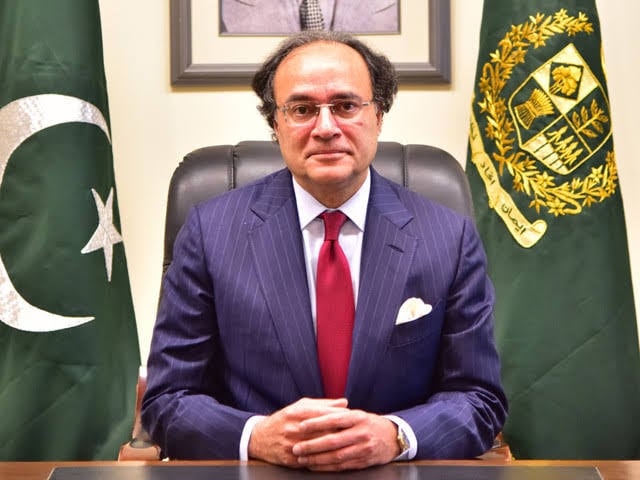
Finance Minister Muhammad Aurangzeb has said that Pakistan is “all good” on the rollover of the $3 billion debt owed to Saudi Arabia that matured earlier this week.
Addressing reporters after attending a meeting of the Senate Standing Committee on Finance on Thursday, Aurangzeb addressed the status of the funds. “We are all good on that,” the finance minister stated when asked if Riyadh had extended the deposit.
The statement serves as the first official confirmation on the matter since Aurangzeb returned from Saudi Arabia last weekend, where he and Power Minister Sardar Awais Leghari held bilateral financial talks.
Saudi Arabia originally provided the $3 billion loan in April for a three-month period to help Pakistan manage debt repayments to the United Arab Emirates (UAE). Prior to Aurangzeb’s remarks, both the Ministry of Finance and the State Bank of Pakistan (SBP) had not responded to questions regarding the status of the rollover.
Under Pakistan’s $7 billion International Monetary Fund (IMF) programme, the UAE, Saudi Arabia, and China had committed to keeping a combined $12.5 billion in cash deposits with the SBP until the programme concludes in September next year.
However, after the UAE withdrew its support, Saudi Arabia increased its financial exposure to $8 billion to cover the gap.
Currently, Pakistan’s gross official foreign exchange reserves stand at $18.5 billion, which represents three months of import cover. Saudi Arabia has also extended the repayment timeline for another cash deposit.
Meanwhile, officials are looking at options to extend the maturity of short-term external debt and stagger payments on energy debt to Chinese companies operating power plants under the China-Pakistan Economic Corridor (CPEC).
Additionally, Pakistan has requested a $6.7 billion oil facility on deferred payments over a 15-year period from Saudi Arabia.
During the same committee session, discussions also turned to the Benazir Income Support Programme (BISP), where 1,300 of the 3,486 sanctioned positions remain vacant.
Aurangzeb opposed discussing the vacancies in the finance committee, arguing that the planned transition of BISP’s Rs838 billion budget to digital wallets and digital disbursements removes the need for new recruitment.
He stated that the shift to technology would enhance transparency and efficiency, pointing to an incident that occurred during cash distribution last year.
BISP Chairperson Rubina Khalid opposed his stance, stating that the agency has not hired new staff since 2014 and requires dedicated personnel to manage its responsibilities.
She noted that relying on five-year deputations from other government departments creates institutional memory issues for the organisation.
The committee, led by Senator Saleem Mandviwalla, decided to refer the hiring dispute to the austerity committee to review the operational need for new recruitments.





