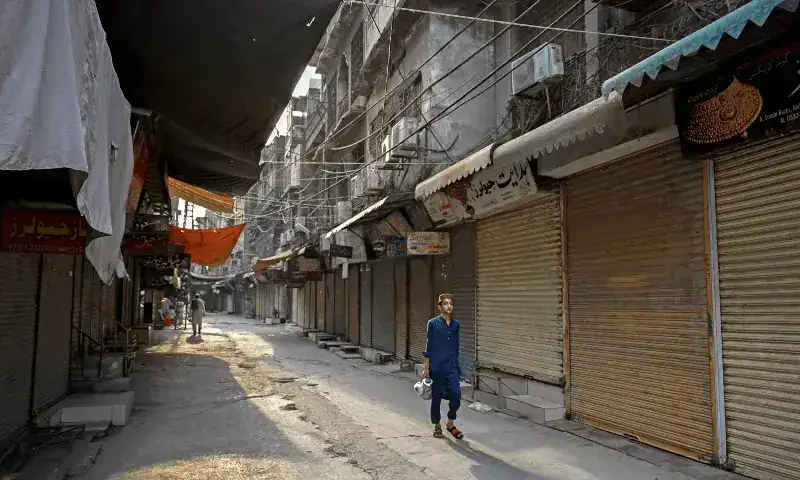
The federal government has extended operating hours for shops, markets, restaurants, and other commercial outlets across Pakistan after a meeting of the Committee for Monitoring and Implementation of Austerity Measures, chaired by Deputy Prime Minister and Foreign Minister Ishaq Dar, was held on Tuesday.
Officials cited longer summer daylight hours and rising temperatures as the primary reason for adjusting the schedule.
Under the revised guidelines, shops, markets, malls, and general retail outlets are permitted to remain open until 9:00 PM.
Restaurants, cafes, and eateries can operate until 11:00 PM, though takeaway and delivery services are entirely exempt from these restrictions.
Marriage halls and event venues must close by 10:00 PM, reflecting no change from their previous schedule. Essential services, including pharmacies, hospitals, fuel stations, and IT and telecom operations, remain completely exempt from these limits.
The committee directed provincial governments to coordinate with federal authorities to enforce the new timings.
The adjustment comes amid an ongoing national austerity drive. Prime Minister (PM) Shehbaz Sharif previously extended these countrywide measures until June 13. The broader austerity plan was originally implemented on March 9 to counter a global energy crisis triggered by the closure of the Strait of Hormuz during the Middle East war.
The extended austerity framework includes a 50 percent reduction in fuel allowances for official government vehicles, though operational vehicles like public buses and ambulances are exempt.
Furthermore, the state has grounded 60 percent of its official vehicle fleet and placed a complete ban on foreign visits for ministers and government officials, unless the travel is deemed essential for national interests.
Govt operations also remain restricted under these measures, with the official working week for public offices reduced to four days, running from Monday to Thursday.
Financial cuts form a major part of the strategy, with parliamentarians facing a 25 percent salary reduction, while employees of state-owned enterprises and government-supervised institutions see salary cuts ranging between five percent and 30 percent.
Additionally, overall expenses for government departments have been slashed by 20 percent, alongside a strict ban on purchasing new vehicles, furniture, air conditioners, and other administrative equipment.