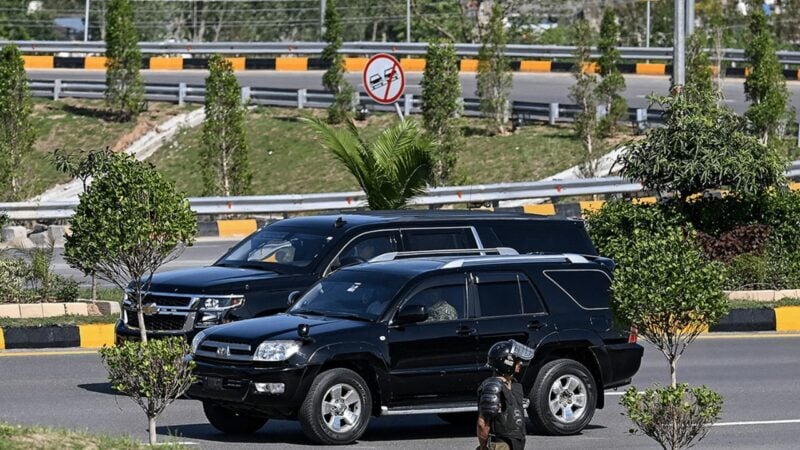
The federal government has defended its decision to purchase 45 bulletproof vehicles for next year’s Shanghai Cooperation Organisation (SCO) Council of Heads of State summit in Islamabad, saying that the vehicles are necessary to provide the “maximum possible level of protection” to visiting foreign dignitaries.
The Cabinet Division, in a statement shared by Defence Minister Khawaja Asif on X, said sceptical and unwarranted comments had appeared in the press and on social media over the purchase, adding that they appeared to have missed its context and perspective.
The Economic Coordination Committee (ECC) of the Cabinet approved a supplementary grant of more than Rs6 billion earlier this month for the purchase.
According to the Cabinet Division, the SCO summit, scheduled for August-September 2027, will be one of the most high-profile international events hosted by Pakistan, set to be attended by heads of state, governments and international organisations.
The division said that the gathering presented an opportunity to raise Pakistan’s stature and honour amongst the comity of nations, making secure and reliable transport arrangements essential.
“Ensuring the maximum possible level of protection becomes all the more critical keeping in view Pakistan’s security paradigm, in particular the threats posed by hostile external elements,” it said.
The Cabinet Division added that the latest bulletproof vehicles currently available to it were 2016 models and were “far below the standards required for the summit”.
It said the requirement for 45 new vehicles had been considered at several forums, with the number representing the bare minimum requirement.
Around 300 other vehicles needed during the summit will be rented, rather than purchased, the division added.
“The significance of the summit cannot be underestimated, trivialised or politicised,” the statement stressed, urging Pakistanis to “be proud of the honour conferred on Pakistan and support the government’s effort to organise it in a befitting manner”.
The defence comes weeks after the government reimposed austerity measures on Sept 17 to conserve fuel amid renewed tensions in the Middle East. The measures included a complete ban on the purchase of vehicles of all types, although the restriction did not apply to development projects.