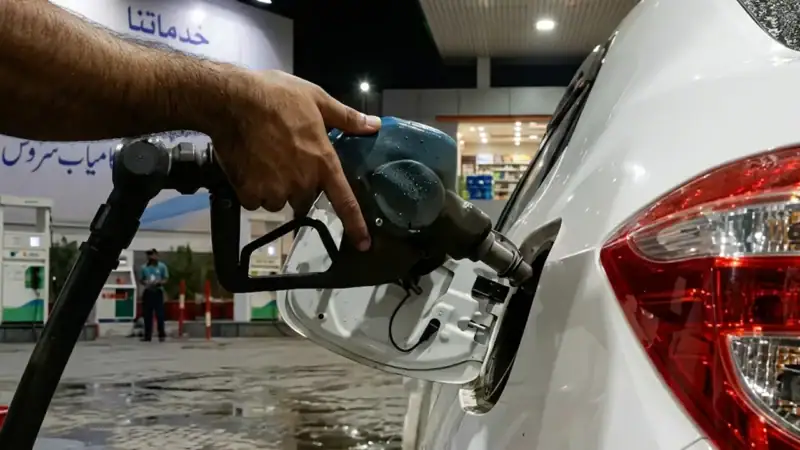
The federal government of Pakistan has increased the price of petrol by Rs5.58 per litre and High-Speed Diesel (HSD) by Rs4.18 per litre on Tuesday.
With this price adjustment, petrol retails at Rs364.35 per litre, while HSD costs Rs385.95 per litre. The government maintains a levy of Rs114 per litre in taxes and duties on petrol, alongside Rs100 per litre on diesel.
A notification issued by the Petroleum Division confirms that the new rates take effect on Wednesday, September 9.
Fuel rates in the country experienced sharp fluctuations earlier this year. HSD reached a peak of Rs520.35 per litre on April 3, after climbing from Rs281 per litre when the United States (US)-Iran war broke out on February 28. Similarly, petrol hit a high of Rs458.41 per litre on April 3, rising from Rs266 per litre in the first week of March.
Addressing the pricing mechanism on July 17, Petroleum Minister Ali Pervaiz Malik announced that fuel prices would shift to daily revisions due to international market fluctuations following renewed conflict between Iran and the US.
“The cabinet and the prime minister have decided to give the Oil and Gas Regulatory Authority the responsibility of deciding fuel prices on a daily basis based on international market trends,” Malik stated during the July 17 announcement.
Before implementing daily pricing, the government issued weekly price revisions starting in early March, coupled with fuel conservation measures to handle potential supply disruptions from the Middle East conflict.
In April, the federal government also introduced targeted relief programs to provide subsidised fuel.
Price shifts in these two fuels impact distinct segments of the economy. Petrol powers private vehicles, small cars, rickshaws, and two-wheelers, directly affecting middle and lower-middle-class commuters. Diesel drives heavy transport, power generation units, and large generators, influencing wider public transport and supply chains.
Both fuels serve as primary revenue sources for the government, with monthly sales ranging between 700,000 and 800,000 tonnes, compared to the monthly demand of 10,000 tonnes for kerosene.





