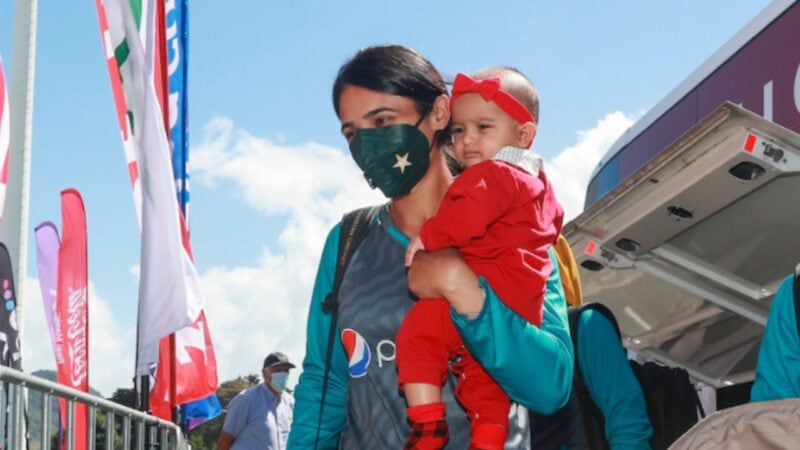
The International Cricket Council (ICC) has introduced Return to Play Post-Pregnancy Guidelines for female cricketers, giving players, national boards, coaches and medical teams a practical framework to support a safe return to the sport after childbirth.
The guidelines were issued during the Women’s T20 World Cup 2026 in England and Wales, as women’s cricket continues to grow in professionalism and more players choose to start families while remaining active in the sport.
ICC Chairman Jay Shah said that the initiative addresses one of the most fundamental questions facing the women’s game.
“No player should have to choose between motherhood and representing her country at the highest level,” Shah said.
“The ICC’s Return to Play Post-Pregnancy Guidelines are an important step in creating a more supportive and informed environment across the game. As women’s cricket continues to grow globally, it is essential that we protect player welfare, retain talented athletes and strengthen pathways for current and future generations. These guidelines reflect our commitment to building a game where women can thrive, both on and off the field,” he added.
At the centre of the framework is a six-stage model known as the “6 Rs”, Ready, Review, Restore, Recondition, Return and Refine.
The process covers early recovery after birth, medical and wellbeing reviews, a gradual return to structured training, cricket-specific conditioning, a return to competition and ongoing monitoring once players re-enter the professional setup.
Dr Philippa Inge, an ICC Medical Advisory Committee member and Australia team doctor who led the drafting of the guidelines, said the framework was built to reassure players.
“The ICC’s Return to Play Post-Pregnancy Guidelines are designed to show players that having a baby doesn’t need to be the end of their career,” Dr Inge said.
She noted that many cricket boards previously lacked formal pregnancy policies and stressed that return-to-play decisions should be tailored to individual players and their families rather than applied through a rigid template.
The guidelines also cover practical support measures including flexible training arrangements, continued access to facilities and services, childcare advice, dedicated spaces for feeding or caring for infants at venues, and travel assistance where possible. Each player would be assigned a dedicated case manager, typically a doctor or physiotherapist, to coordinate support throughout pregnancy and recovery.
West Indies spinner Afy Fletcher, currently playing at the ICC Women’s T20 World Cup 2026 after returning to international cricket following the birth of her son in 2021, welcomed the move.
“I think it’s really good that the ICC is giving cricket boards policies to look after women after pregnancy,” Fletcher said. “It gives you a chance to have your family and then return, so I think that’s one of the best things they could have done for women’s cricket.”
Reflecting on her own return, Fletcher said, “Physical recovery was challenging but, more than that, I struggled to leave my child and miss creating precious moments. That’s why every moment I play on the field is driven by him. Every player’s journey is different, but you have to have strong support, get healthy and trust the process.”
The guidelines form part of the ICC’s broader 100% Cricket movement, which promotes education and awareness around health-related topics in cricket environments.