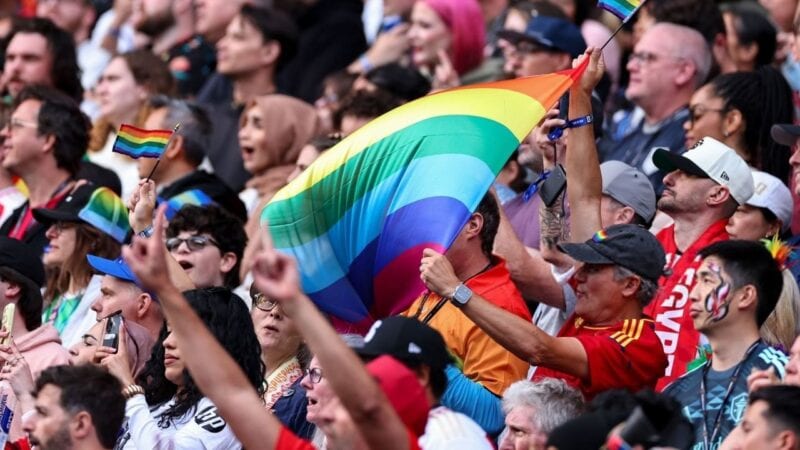
Egypt and Iran drew 1-1 in their FIFA World Cup 2026 Group G decider at Lumen Field in Seattle on Saturday amid a controversy that had been building since December, with both countries objecting to their match being held during the city’s annual Pride weekend and rainbow flags being displayed inside the stadium.
FIFA, however overruled both federations, confirming that rainbow flags and symbols representing the LGBTQ+ community will be permitted under the tournament’s Stadium Code of Conduct.
“The FIFA World Cup 2026 is an inclusive event that welcomes people from all backgrounds. Fans of all sexual orientations and gender identities are welcome at matches and events,” FIFA said in a statement.
“General statements of human rights, including rainbow flags and other flags representing sexual orientation and gender identity, are permitted under the FIFA World Cup 2026 Stadium Code of Conduct and may be displayed inside stadiums provided they are used in a manner consistent with the code,” FIFA added.
The controversy began after December’s World Cup draw confirmed Egypt and Iran as the two sides scheduled to play in Seattle on June 27, which falls on the city’s Pride weekend. Seattle PrideFest, organised by a nonprofit since 2007, had designated the fixture for celebration before the draw.
Both countries have laws that criminalise or restrict the LGBTQ+ community.
In Iran, same-sex relationships are illegal and carry punishments ranging from lashings to execution. Egypt does not explicitly outlaw homosexuality but has repeatedly arrested members of the LGBTQ+ community under vague public decency and debauchery laws, according to media reports.
The Iran Football Federation issued a formal statement condemning the promotional activities, referring to the LGBTQ+ community as “this movement.”
“Iran and Egypt are two Muslim countries with deep cultural and religious commonalities, and the views expressed by both federations reflects the values and beliefs shared by the people of both countries,” the statement read.
“Our position is that no ceremonies, or promotional activities associated with this movement should be present inside the stadium or as part of the match environment. This position has been communicated to FIFA through the appropriate channels,” the statement added.
The Egyptian Football Association had also written to FIFA in December, saying it “categorically rejects the holding of any activities related to supporting homosexuality” during the match.
FIFA President Gianni Infantino distanced the governing body from the “Pride Match” label in January, telling Swiss newspaper Weltwoche: “I must clarify that there will be no ‘Pride Match’ at the World Cup. There will be a FIFA World Cup match in Seattle, and on the same day, events organised by external organizations will be taking place in the city. But that has nothing to do with the match itself.”
At Thursday’s pre-match press conference, a FIFA official told reporters that Iran’s team was “only willing to answer questions in relation to the game” before Iran coach Amir Ghalenoei spoke.
“I said we are here to play football. For nothing else,” Ghalenoei said. “Our entire focus is going to be on tomorrow’s game, on succeeding in tomorrow’s game,” he added.
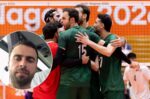
On the pitch, Mahmoud Saber gave Egypt the lead in the fifth minute before Ramin Rezaeian equalised for Iran in the 14th minute.
The 1-1 draw saw Egypt finish second in Group G, with Iran ending the group stage in third place, as Belgium’s 3-0 win over New Zealand simultaneously sealed the group for the Belgians.