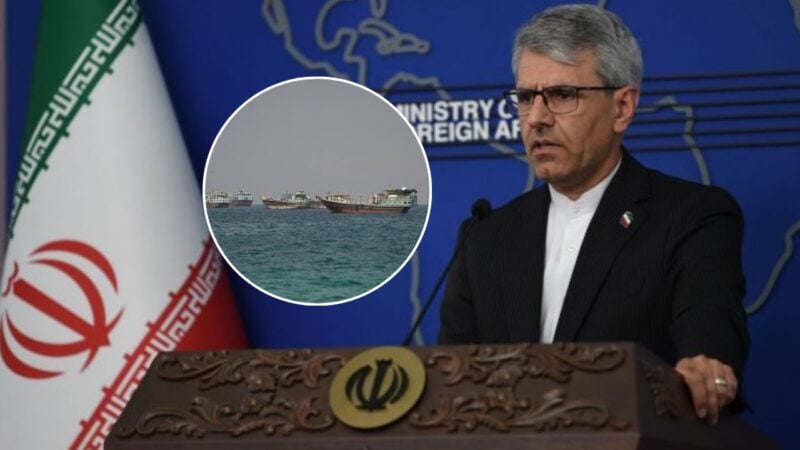
Iran has warned South Korea that any military participation in operations in the Persian Gulf or Strait of Hormuz would have “serious consequences” as Seoul considers a possible contribution to efforts to secure navigation through the strait.
Iranian Foreign Ministry spokesperson Esmaeil Baqaei said on Monday that Iran and South Korea have maintained diplomatic relations for more than 64 years and that ties between the two countries have developed on the basis of mutual respect.
“Iran attaches great importance to its friendly relations with South Korea,” Baqaei said in a post on X.
Baqaei, however, warned that any South Korean military presence or participation in operations in the Persian Gulf and Strait of Hormuz would be viewed by Iran as support for the United States (US).
The warning comes as Iran responds to what he described as US “aggression” and “war crimes against women and children.”
“Any military presence or participation in operations by another country in the Persian Gulf and the Strait of Hormuz would inevitably be regarded as direct support for the aggressor and would have serious consequences,” Baqaei wrote.
He also urged countries not to respond to pressure from Washington. “No sovereign and responsible country should succumb to US pressure and intimidation and become complicit in acts of aggression and horrific crimes against the great Iranian nation,” he said.
Separately, South Korea’s Foreign Ministry said on Monday that Seoul was communicating with the international community over the situation in the Middle East and navigation through the Strait of Hormuz.
“We are closely communicating with the international community, including relevant countries, to help restore peace and stability in the Middle East as soon as possible and to ensure the free passage of all vessels, including those of our country, through the Strait of Hormuz,” the ministry said.
A South Korean presidential official said on Friday that Seoul had not made a final decision on deploying forces to the Strait of Hormuz and that a review remained underway.
The official said that South Korea could consider contributing to international efforts to ensure freedom of navigation through the strait as long as such a move does not compromise the country’s defence readiness.
Earlier, South Korean broadcaster SBS also reported that Seoul was preparing for a possible deployment involving P-8 maritime patrol aircraft, an explosive ordnance disposal team and a logistics support ship.
Any deployment would require a decision by South Korea’s National Security Council, approval from the Cabinet and consent from South Korea’s National Assembly.





