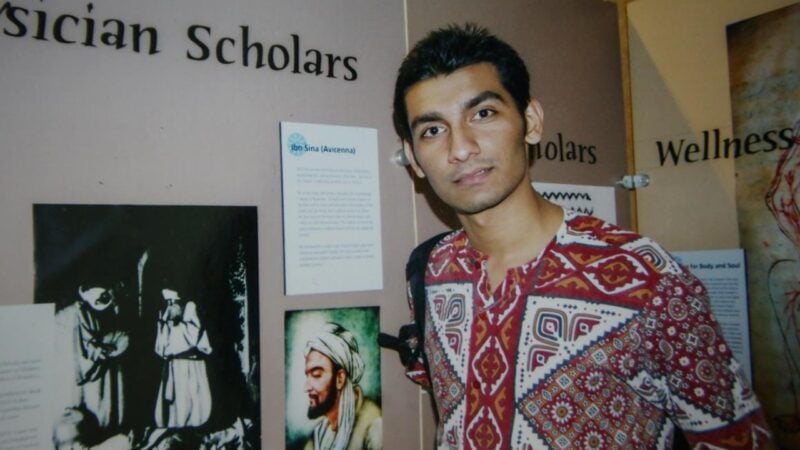
The Lahore High Court (LHC) has asked prosecutors to address whether electronic material, including a Facebook page attributed to former university lecturer Junaid Hafeez, can be admitted as evidence in his long-pending appeal against a death sentence.
A two-member bench comprising Justice Sadiq Mahmud Khurram and Justice Muhammad Jawad Zafar raised the issue on Tuesday while hearing Hafeez’s challenge to his 2019 conviction. His appeal has been pending before the high court since 2020.
Advocate Asad Jamal appeared for Hafeez, while Advocate Athar Shah Bokhari represented the complainant.
The proceedings also revealed that formal notices had not been issued to the parties after the case was moved from the LHC’s Multan bench to its principal seat in Lahore.
The transfer was made in December 2021 at the request of Hafeez’s counsel.
The court issued the required notices during Tuesday’s hearing, with both the prosecution and complainant’s lawyers receiving them in the courtroom.
The bench initially set October 7 for the next hearing. Bokhari, however, requested more time to prepare his submissions, prompting the court to defer fixing a date.
Hafeez, a former visiting lecturer in Bahauddin Zakariya University’s (BZU) English Literature Department, was arrested on March 13, 2013, over alleged Facebook uploads.
His trial began in 2014.
A Multan district and sessions court sentenced him to death for blasphemy on December 21, 2019. He challenged the verdict before the high court the following year.
The case has been marked by repeated delays and security concerns.
At least seven judges were transferred during the trial, while 15 prosecution witnesses testified. Eleven others were not called after being declared irrelevant.
The Punjab home department shifted the trial to Multan Central Jail in April 2014 citing security concerns.
Hafeez’s lawyers also faced threats. His former counsel, Rashid Rehman, was shot dead in his office in May 2014 after the Human Rights Commission of Pakistan raised concerns over death threats against him the previous month.
Another lawyer representing Hafeez received a threatening letter from Islamic State in December 2014 warning him to withdraw from the case.