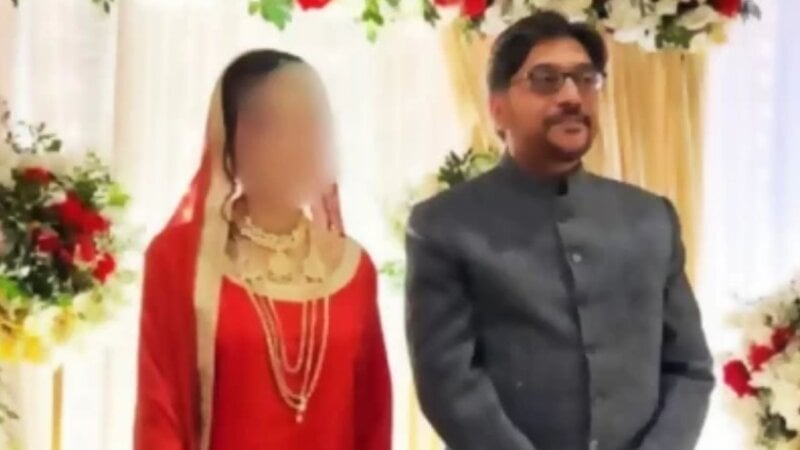
Family of the victim and netizens are questioning the Crime Control Department’s (CCD) handling of the Hina Javed murder case after its head, Additional Inspector General of police (AIG) Sohail Zafar Chattha, discussed the investigation and allegations against domestic worker Zeeshan during a briefing.
Addressing the National Assembly Standing Committee on Interior through an online briefing, Chattha shared details of the investigation and discussed the evidence gathered against Zeeshan, who is accused of raping and murdering Hina.
During the briefing, the CCD boss described Zeeshan as a sexually perverted individual and claimed that he had admitted to sexually abusing a goat. He also told committee members that Zeeshan had confessed to sexually assaulting Hina’s body after her death and that his DNA matched the evidence collected by investigators.
Chattha also spoke about the health of Faisal Asghar – Hina’s husband who was taken into custody for his alleged involvement in the killing – and said that he was suffering from brain cancer.
He said Faisal was an MBBS doctor who also held a PhD and worked as a lecturer. Chattha added that investigators had spoken to Faisal’s first wife, who reportedly told them that he was not a violent person.
Chattha added that investigators had reviewed phone conversations between Hina and Faisal but found no evidence of hostility or violence. According to Chattha, Hina had, however, complained that Faisal “was not fulfilling her marital rights”.
The CCD chief’s briefing did not sit well with netizens as they questioned the investigation’s direction and the emphasis placed on Hina’s private life and marital relationship.
Actor Iffat Omar questioned whether Hina’s private messages about marital intimacy had been properly authenticated and examined.
“So being not able to exercise conjugal rights could be the motive of such brutality on her by someone who could? Were Hina Javed’s private messages about marital intimacy authenticated and fully examined? What evidence establishes the motive for this brutality and rules out anyone else’s involvement? These questions need evidence-based answers through an independent inquiry,” she wrote.
Dr Ramsha Mir criticised the briefing, posting, “Lies, lies, lies.” She alleged that investigators were shifting attention towards Zeeshan to protect Hina’s husband and father-in-law, and questioned who had the power to influence the investigation.
Other users also criticised the Punjab Police’s account of the case. One wrote, “Shame on Punjab Police for making up this absurd and lame story! Husband is the killer and they are protecting him! How pathetic.”
In a detailed reaction, another social media user called for the complete DNA and post-mortem reports to be made available through the proper legal process.
The user also demanded an independent examination of the forensic findings, including any references to Faisal Asghar and Hina’s father-in-law Asghar Fayaz, and called for a letter written by Zeeshan’s mother to be considered part of the investigation.
The post also called for a higher-level investigation and a judicial commission to examine the handling of evidence and all leads in the case, arguing that no one should be declared innocent or held responsible before the evidence is independently assessed.