An opinion article in an Israeli newspaper has suggested that North Atlantic Treaty Organisation (NATO)’s collective defence provisions will not protect Turkish troops if they were deployed in Syria, potentially leaving them vulnerable to Israeli strikes.
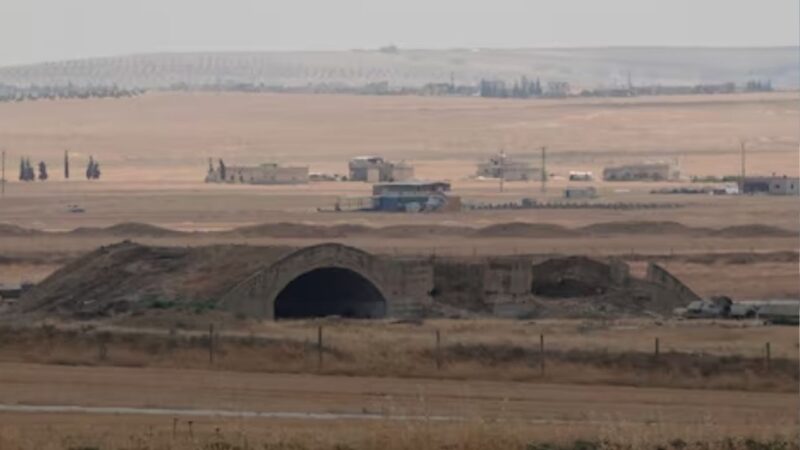
The article has been published two days after Israeli air strikes hit parts of a disused Syrian airbase near the Turkish border, where Israel believed Turkish troops could soon be deployed.
Shay Gal, head of government relations and strategy firm Line of State, wrote that Israel had studied where NATO’s Article 5 applies and argued that it protects Turkish territory but does not extend to Turkish forces operating in Syria.
“Before Turkish troops arrive, the target is infrastructure; once they arrive, striking it also risks Turkish casualties, retaliation, American intervention and confrontation with a NATO member. Those costs alter the calculation, not Israel’s authority to decide,” Gal wrote.
He added that “the treaty protects Turkish territory; Turkish troops do not carry that territory with them onto Syrian or occupied Cypriot soil.”
Tensions between the two countries have been growing over Turkiye’s expanding military role in Syria and its relationship with the government in Damascus.
Gal argued that Turkiye’s involvement in Syria had moved beyond political influence, saying Ankara was training Syrian forces and helping rebuild military institutions.
He said that Turkish military teams had examined T4, Palmyra and Hama in 2025 as possible sites for Turkish military operations and that Israel later carried out strikes on those facilities.
According to Gal, Israel acted before Turkish military infrastructure could develop into an occupation similar to Turkey’s presence in northern Cyprus.
The issue has also raised concerns in Washington DC. US Ambassador to Turkey and envoy to Syria Tom Barrack said that Turkiye was not warned before the latest Israeli strikes, despite a communication channel between Turkiye and Israel over Syria that was established last year.
Barrack added that communication had broken down and called for a new mechanism involving Israel, Syria and Turkiye to prevent further incidents.
“This underscores the need for a deconfliction mechanism involving Israel, Syria and Turkiye. That is something we are actively working on to establish in order to prevent future miscommunication,” he said.
Barrack also described Israel’s strikes on the Abu al-Duhur military air base as an “unnecessary escalation”, saying that the Syrian government had not adopted a hostile posture towards Israel and had indicated a preference for reducing tensions.
“We are deeply concerned,” he added. “[This] does not advance regional stability.”
The Syrian government said that eight strikes hit the runway of the disused airbase early Tuesday morning.
The Syrian Observatory for Human Rights reported that the strikes followed a visit by a Turkish military delegation to the site in recent days as part of efforts to reactivate it.
Syrian officials told an international media outlet that a Turkish technical team had been working on repairs to the runway and control tower but said there were no Turkish troops at the base.
“The last team tasked with reconstructing the base was there two days beforehand,” one Syrian official said.