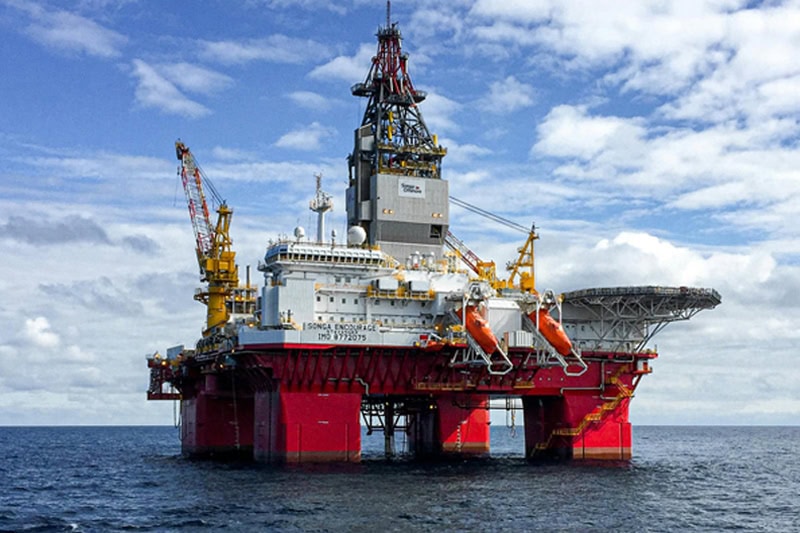
Pakistan has formally reopened its offshore oil and gas exploration frontier after a nearly two-decade hiatus, signing Production Sharing Agreements (PSAs) and Exploration Licences for 23 blocks awarded under the Offshore Bid Round 2025.
Federal Minister for Petroleum Ali Pervaiz Malik witnessed the signing ceremony, which finalized the contractual framework for a 54,600-square-kilometer area across the Indus and Makran offshore basins adjoining the coastal waters of Sindh and Balochistan.
The initiative represents a multi-phase financial commitment aimed at reducing Pakistan’s heavy reliance on imported oil, gas, and liquefied natural gas. Phase-I of the initial three-year licence period involves an investment of approximately $82 million dedicated to extensive geological and geophysical studies, including seismic data acquisition, processing, and interpretation. If these initial activities yield encouraging results and progress to Phase-II drilling operations, total investment is projected to increase to nearly $1 billion.
Domestic companies secured the entirety of the 23 offshore blocks. Mari Energies Limited emerged as the primary participant, securing stakes in all 23 blocks, including 18 as the operator and five as a joint venture partner. State-run entities Oil and Gas Development Company Limited (OGDCL) and Pakistan Petroleum Limited (PPL) were each awarded eight blocks, with both companies serving as operators for two of their respective blocks.
Prime Global Energies Limited was awarded one block as an operator, while United Energy Pakistan Limited and Orient Petroleum Incorporation are participating alongside other joint venture partners. Two specific blocks within this portfolio, Offshore Deep-C and Offshore Deep-F, were previously executed on December 2, 2025, by a consortium including Mari Energies, Turkish Petroleum Overseas Company, and Fatima Petroleum Company Limited.
Historically, Pakistan’s offshore frontier spans 282,623 square kilometres, but only 18 exploratory wells have been drilled since independence. The country’s last major offshore drilling attempt occurred in 2019 at the ultra-deepwater Kekra-1 well—a joint effort by ExxonMobil, ENI, OGDCL, and PPL—which was ultimately declared dry. To boost regulatory clarity for this round, the government promulgated the Offshore Petroleum Rules and introduced a Model Production Sharing Agreement.
Alongside the technical operations, the winning companies have committed to financing social welfare and capacity-building initiatives in the coastal regions of Sindh and Balochistan.