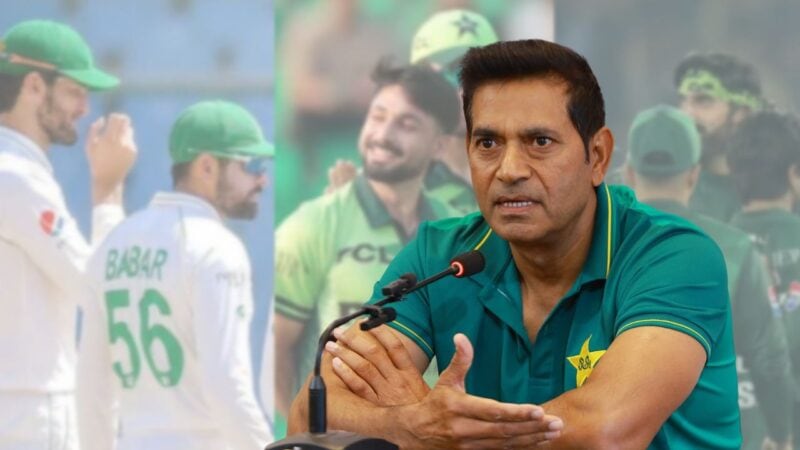
Pakistan Cricket Board (PCB) Director High Performance Aqib Javed has said that the newly introduced format-based central contracts are the first step towards having separate squads for each format of the game.
Speaking to a private media outlet, Aqib said that the separation of Test and T20 cricket was an immediate priority.
“This is just the first step. Each format can have its own separate team,” he said. “Test and T20 formats cannot run together. You will have to separate those teams right away,” he added.
Aqib stressed that the previous contract system was unfair to players who specialised in one format, as they were measured against cricketers from different formats. The new structure ties contracts and salaries to format-specific performance.
Under the new structure, players in the top tier of Track A, which covers Test specialists, will earn PKR 4 million per month, while those in the second tier will receive PKR 3.6 million.
Track AB, covering Test and ODI players, offers PKR 4.8 million for tier one and PKR 3.8 million for tier two. Track BC players will earn PKR 3.4 million and PKR 2.6 million respectively, while T20 specialists in the top tier take home PKR 2.6 million, with the second tier earning PKR 2 million per month. Pathway cricketers in Track D will receive PKR 1 million per month.
Eligibility criteria also shift under the new framework. A player must have featured in six first-class matches to qualify for a Test category central contract. The Test and ODI category requires four first-class and four List A appearances. ODI and T20 category players must play two List A matches and 10 T20s, while those contracted purely for T20 cricket must participate in domestic T20 competitions and can also play franchise cricket.
On NOCs, Aqib said Test players will receive clearance for four-day matches abroad, while Test and ODI category players can get one franchise NOC. The ODI and T20 category will receive two NOCs.
Aqib emphasised that the goal is to stop players from spreading themselves across all three formats.
“We will push players to stay in their format,” he said. “Those who are Test players should focus on Test cricket. Our Test cricket is in bad shape. It cannot happen that you play T20 for three or four years and suddenly come into Test cricket. You have to accept that you cannot bowl 25 overs in a Test match,” he stated.
He also highlighted the importance of the D category, describing it as the most significant part of the new structure.
“The D category will get the most attention. There will be 16 to 20 players in it and we will develop them according to their format from the very beginning.”
Aqib added that players who miss domestic cricket requirements will lose their contracts.
“The whole point of a central contract is commitment. Commitment means you play international cricket and domestic cricket alongside it. If you do not play first-class cricket according to your format, you will not get a contract and it will go on hold,” he said.
He confirmed that changes to the T20 team are coming, pointing to the recently announced Asia Cup squad as an indication of the direction the board is taking.