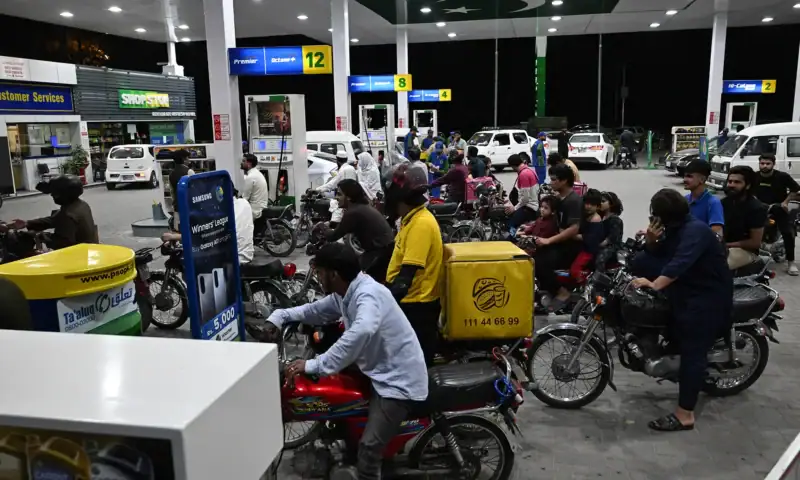
The federal government of Pakistan has decreased the price of petrol by Rs4 per litre, while maintaining the current rate of High-Speed Diesel (HSD) for the week ending June 12.
The decision, which took effect on Friday, follows fluctuations in global oil prices during the preceding week.
Following the adjustment, the ex-depot price of petrol dropped to Rs377.79 per litre from the previous rate of Rs381.78 per litre.
The change marks the fourth consecutive weekly reduction in petrol prices, resulting in a cumulative decrease of approximately Rs37 per litre over the past month. In the preceding week, the government had implemented a Rs22 per litre price cut for both petrol and diesel.
The ex-depot price of HSD remains unchanged at Rs380.78 per litre. To keep the diesel rate steady, the government modified taxes and other levies, as fuel is currently viewed as highly priced. HSD prices have declined from a peak of Rs520.35 per litre, which was documented on April 10.
Because of its frequent application in heavy freight transport, HSD serves as a primary driver of inflation across the economy.
Tax structures on fuel contribute significantly to the retail rates. The government currently collects Rs125 per litre in taxes on petrol, a figure that combines the petroleum levy, customs duty, and a climate levy. For HSD, the total tax collection stands at approximately Rs100 per litre, comprising customs duty, the petroleum levy, a climate support levy, and the inland freight equalisation margin.
Additionally, the state levies a petroleum tax of Rs21 per litre on kerosene oil and Rs16 per litre on light diesel oil.
Petrol and HSD function as the primary revenue generators within the country’s fuel sector. Combined monthly sales for these two products range between 700,000 and 800,000 tonnes. In contrast, the monthly demand for kerosene oil hovers around 10,000 tonnes.