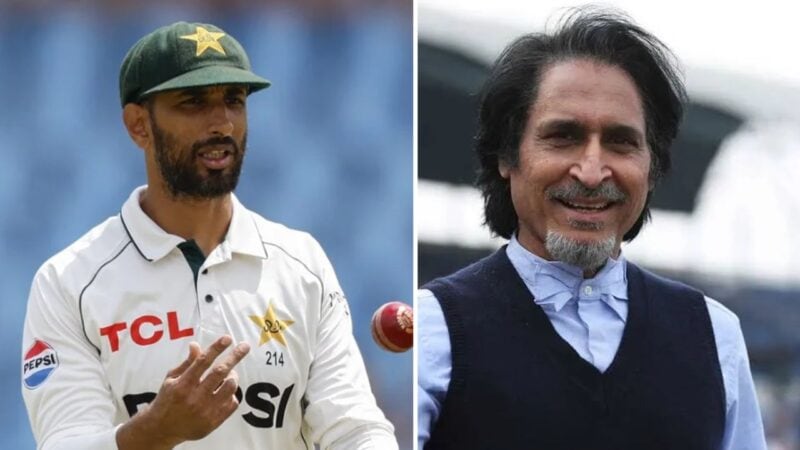
Former Pakistan Cricket Board (PCB) chairperson Ramiz Raja has criticised the current management over the sacking of Shan Masood as the Test captain, arguing that Masood paid the price for a squad that never gave him a fair chance.
While star batter Babar Azam has been handed back the reins of the side for the upcoming Test tour of the West Indies, Masood’s removal looked inevitable after Pakistan lost 12 of the 16 matches played during his tenure, which began in late 2023.
Speaking on his YouTube channel, Raja said the PCB had turned Masood into a scapegoat despite giving him a mediocre squad to work with throughout his captaincy.
He suggested that had he been in Masood’s position, he would have taken the matter up formally with the board. “If I were in Shan Masood’s position, I would have submitted a written complaint.”
“How can you expect different results when you’re repeatedly given an average group of players? If the quality of the squad isn’t good enough, the captain inevitably ends up carrying the blame,” he added.
Raja also weighed in on the squad selected for the West Indies series, warning that Babar could face the same struggles that plagued Masood.
Addressing Masood’s sacking, PCB chief selector Aaqib Javed defended the board’s decision, saying the move came down to results rather than form.
“We wanted to look for a captain who could lead the team in a much better way,” he said.
“Shan’s individual performance was good but as captain we weren’t getting the desired results,” Javed added.
He said the selection committee was unanimous in recommending Babar as captain, and no other player came up during discussion.
Javed also pointed to several shortcomings in Pakistan’s Test performances under Masood, including losses to South Africa and the West Indies.
“The captain has the responsibility of finishing the games,” Javed said.
“Some things are the responsibility of the team, some are the responsibility of the selectors, and some are the responsibility of the captain. The captain’s responsibility also includes maintaining the team’s over rate, taking DRS decisions and making the right call at the toss.”