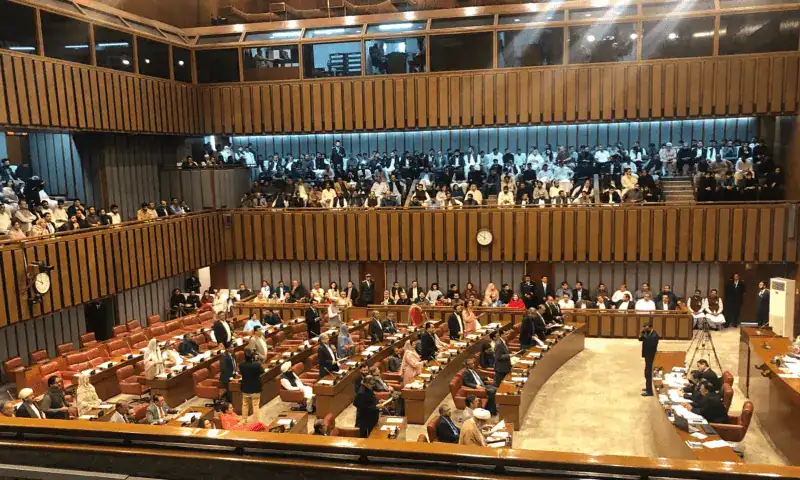
The Senate of Pakistan has returned Rs1.436 billion in savings to the national exchequer after outperforming the federal government’s austerity goals. According to a statement issued by the Senate Secretariat, the upper house exceeded the expenditure rationalisation target set by the Finance Division by 500 percent.
The returned amount constitutes 15.9 percent of the Senate’s total budget for the 2025-26 fiscal year.
Senate Chairman Yousaf Raza Gilani initiated the cost-cutting measures within his own office before expanding the drive across the entire secretariat. Gilani clarified that the Rs1.436 billion consists of “actual, realised savings” rather than deferred liabilities or projected cuts.
To achieve the target, the Senate suspended 17 out of 18 procurement projects that had previously received approval from its finance committee.
The secretariat also froze recruitments, limited non-essential expenditures, and reduced administrative overheads.
Logistical changes contributed heavily to the savings. The official transport fleet was largely grounded, fuel allocations were capped, and usage was placed under strict oversight. The Senate completely discontinued refreshments at official meetings and functions, moving committee proceedings to virtual platforms to eliminate hospitality costs.
Furthermore, all non-essential foreign visits were suspended.
The secretariat revealed that despite a Rs60 million budgetary allocation for new vehicles this year, “not a single vehicle was procured”.
Looking ahead, the Senate Finance Committee accepted a proposal from the chairman to forgo funds meant for replacing condemned official vehicles in the next fiscal year, which is expected to save an additional Rs140 million.
Commenting on the financial discipline, Gilani stated, “Public office is a sacred fiduciary trust”. He maintained that the drive is an ongoing commitment to “responsible governance and fiscal prudence and highest standards of public service,” adding that “every rupee saved is a rupee returned to the people of Pakistan, in whose trust public resources are held”.
The Senate Secretariat stated that by making these figures public, the upper house wants to build transparency and accountability.
The institution noted that the results come from “sustained reforms and disciplined financial management undertaken over time,” aiming to boost public confidence in state institutions during a period when efficient fund utilization remains a national imperative.