Six planets will appear across the predawn sky on Wednesday, August 12, in a planetary alignment commonly referred to as a “planet parade”.
Mercury, Jupiter, Mars, Saturn, Uranus and Neptune will be part of the alignment, although not all six planets will be visible without equipment.
Skywatchers will need to look toward the eastern horizon before sunrise on Wednesday.
Mars and Saturn are expected to be visible to the naked eye, while Mercury and Jupiter may also be seen if weather and viewing conditions are favourable. Jupiter will be positioned low on the horizon.
Uranus will generally require binoculars, while Neptune will need a telescope, meaning viewers may only be able to see three or four of the six planets without equipment.
The planets will appear spread across the sky along the ecliptic, the path followed by the Sun, Moon and planets as seen from Earth. They will not form a perfectly straight line in space but will appear arranged across the morning sky from Earth’s perspective.
A clear view of the eastern horizon, without buildings, trees or hills, could improve the chances of spotting Mercury and Jupiter before daylight.
The term “planet parade” is commonly used when several planets appear arranged across the sky at the same time, while astronomers generally refer to the event as a planetary alignment.
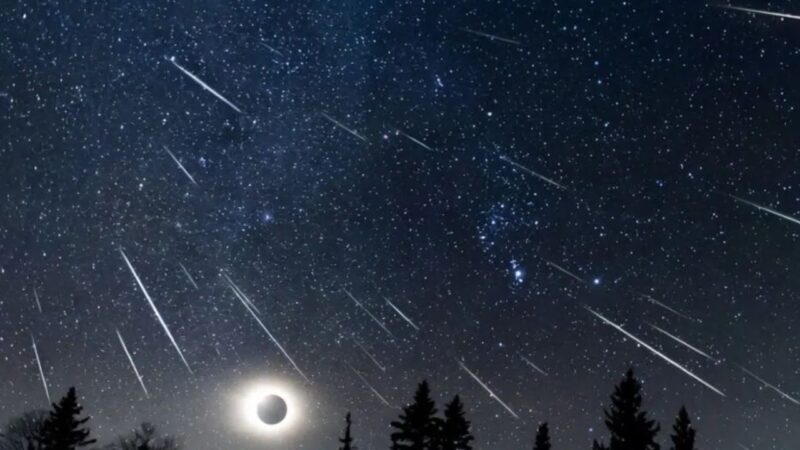
The August 12 event is also taking place during a period of several astronomy events in 2026. The date coincides with a solar eclipse and the peak of the annual Perseid meteor shower, bringing several skywatching events within roughly 24 hours.





