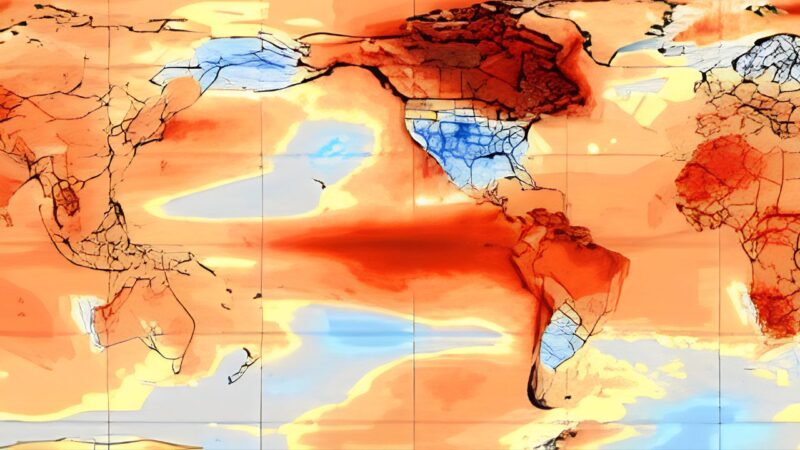
Several regions and dozens of countries around the world could face extreme weather conditions in the coming weeks and months as a powerful El Niño intensifies.
According to reports, the phenomenon could push temperatures to record levels while increasing the risk of droughts, floods and other weather-related disasters.
The ongoing event, known as “Super El Niño”, could become the strongest El Niño recorded since at least 1950, with its effects already emerging in parts of the world.
According to the World Meteorological Organization (WMO), sea surface temperatures in the central and eastern tropical Pacific Ocean are expected to reach record levels between October and December 2026. The event will continue to strengthen before reaching its expected peak in December, affecting weather patterns, economies, ecosystems and communities around the world.
The WMO said that El Niño is firmly established and strengthening rapidly, with an almost 100 percent probability of continuing until February 2027. It also warned that much of the world will experience above-average temperatures while changes in rainfall patterns will increase the risk of droughts in some regions and floods in others.
El Niño is a natural climate pattern that develops every few years when temperatures in parts of the Pacific Ocean rise above normal. Scientists monitor the Niño 3.4 region of the central Pacific near the equator to measure its strength.
According to an international media outlet, the current event reached the “very strong” or “super” El Niño category in early September after ocean temperatures in the region rose 2°C above average.
The report noted that the National Oceanic and Atmospheric Administration (NOAA) raised the probability of the event exceeding the intensity of all El Niño events recorded since at least 1950 to 83 percent on Thursday, up from 75 percent the previous month.
The WMO reported that sea surface temperatures in the central-eastern equatorial Pacific rose from 1.6°C above normal in June 2026 to 2.5°C above normal in August. The seasonal average is forecast to reach around 3.7°C above normal between October and December, potentially surpassing the previous record of 2.6°C recorded between November 2015 and January 2016.
The WMO Secretary-General Celeste Saulo said that El Niño does not create new heat but releases heat that the ocean has stored beneath its surface. She added that the ocean currently holds the highest amount of accumulated heat recorded so far, providing more heat for the phenomenon to release.
The international media outlet reported that the event is already affecting weather patterns, with wildfires in Indonesia and an unusually active tropical cyclone season in the Pacific among the developments linked to the phenomenon. Scientists expect its effects to intensify during the coming winter as ocean temperatures continue to rise.
The intensity of El Niño does not guarantee specific weather events in every country, but it increases the likelihood of extreme temperatures and shifts in rainfall patterns across different regions.
Nigeria, Indonesia, Sudan, India and Brazil are among the countries expected to face some of the most severe effects of the additional heat, according to a report by an international media outlet.
The report cited estimates from climate scientists suggesting that the additional heat could cause up to 450,000 deaths worldwide by February 2027.
The international outlet also identified the Democratic Republic of the Congo, Niger, Chad, Vietnam and the Philippines among countries at risk from rising temperatures.
The impact will vary by region, with some countries facing prolonged dry conditions while others could experience heavier rainfall and flooding.