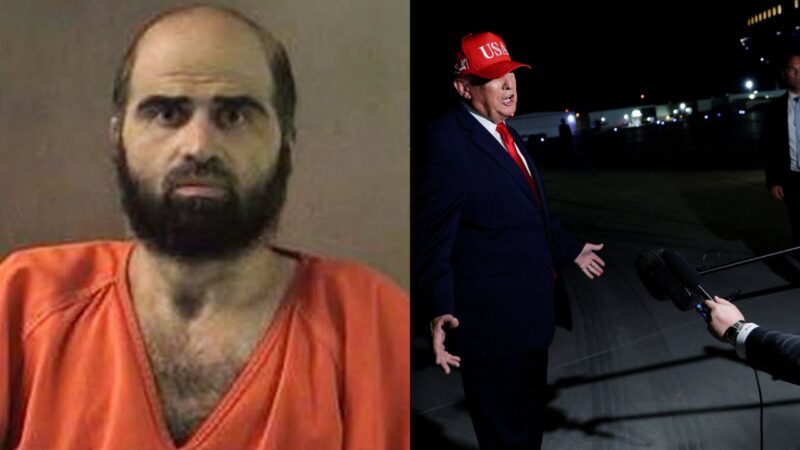
President of the United States (US) Donald Trump has reversed his decision to livestream the execution of former US Army psychiatrist Nidal Hasan, who was convicted of killing 13 people at Fort Hood in Texas in 2009, following widespread criticism of the plan.
Trump said on Thursday that Hasan would still be executed by firing squad as scheduled on December 3, 2026, but the event would not be broadcast online.
“Many very good and well meaning people would rather not watch him die,” Trump wrote on Truth Social, adding that livestreaming the execution could have served as a deterrent by showing how the United States deals with terrorists.
He said that the victims’ families would still be allowed to witness the execution in person, adding, “They deserve to witness JUSTICE!”
The Pentagon announced last week that Hasan would be executed by firing squad, which would mark the first US military execution in more than 60 years. The proposal to livestream the event drew condemnation from human rights groups and others, with the United Nations (UN) describing the plan as “abhorrent”.
US Defence Secretary Pete Hegseth had defended the proposed broadcast, saying that people needed to understand that serious crimes have serious consequences. Trump initially backed the plan but later said that the Pentagon was still considering the matter.
Pentagon spokesperson Sean Parnell said Hegseth had spoken to Trump before the decision was announced. “The Secretary supports the President’s decision, and they are completely aligned,” Parnell said.
John Galligan, a lawyer representing Hasan on civil matters, told an international media outlet that the reversal came as no surprise. He criticised the original proposal as a “dumb decision” that violated Army regulations, adding that the controversy would leave “a stain on our military justice system”.
Hasan, who is paralysed from the chest down, opened fire on unarmed military personnel at a medical facility on November 5, 2009, killing 13 and injuring 32 others. The victims were soldiers awaiting medical examinations and vaccinations.
During his 2013 court martial, Hasan admitted to being the gunman and apologised for “any mistakes”. He said that he believed he was protecting Muslims and the Taliban in Afghanistan from the US military.
Under US military law, a military execution requires presidential approval and appellate review, in which a higher court examines the decision before it can proceed.