The United States (US) administration has enacted fifty percent tariffs on Canadian goods early Saturday after bilateral trade negotiations collapsed, with both nations blaming opposite sides for the breakdown.
The measures took effect immediately past midnight, targeting approximately twenty billion dollars in Canadian exports. The affected volume accounts for a small portion of total Canadian trade with the American market.
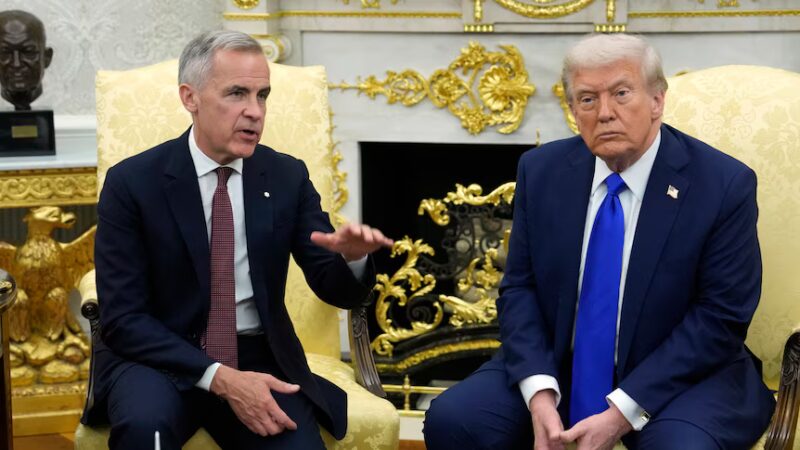
The development escalates political friction between President of US Donald Trump and Prime Minister (PM) of Canada Mark Carney, creating hurdles for regional trade agreement renewals.
Carney announced a total suspension of discussions, warning that Ottawa will retaliate with equal measures.
“I have decided to suspend trade negotiations with the US and have directed Canada’s negotiators to return to Ottawa,” Carney stated. “They have worked hard, in good faith, to defend the interests of Canadians throughout these negotiations up until the very last minute. However, last-minute changes in the US proposed terms were unfair, uneconomic, and called into question the reliability of any deal.”
Earlier discussions indicated a potential framework to reduce duties on steel, aluminum, and automobiles.
However, US Trade Representative Jamieson Greer outlined the official American stance during a White House briefing following the collapse. “Tonight, Canada declined to finalise the trade deal under the terms agreed earlier this week,” Greer stated, adding that the outcome represented a missed opportunity for partnership with the fastest-growing economy in the G7.
American officials maintained that the proposed framework offered the optimal tariff position for any major exporter, while noting that Canadian delegates pushed for additional concessions across key industrial sectors.
The latest duties follow three days of intense discussions in Washington between Canadian trade minister Dominic LeBlanc and Greer.
Trade experts warn that the new implementation lacks preferential treatment under existing regional pacts, exposing vulnerable domestic industries to potential operational disruptions and workforce reductions.