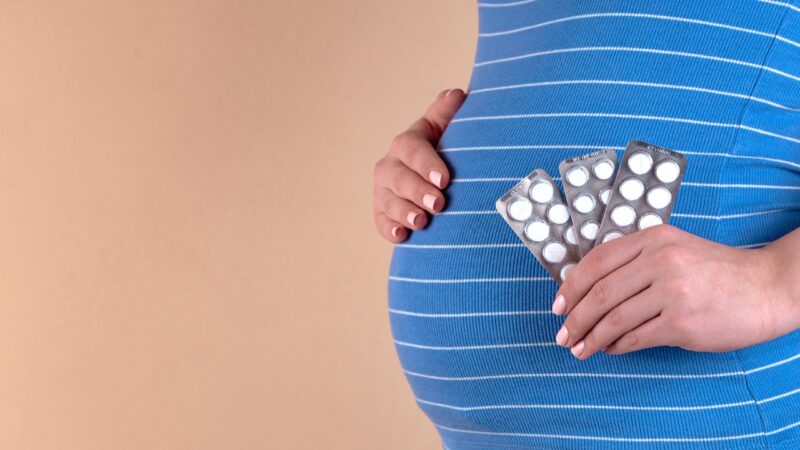
Paracetamol use during pregnancy has been linked to smaller ovaries and wombs in baby girls, according to a Danish study, although researchers stressed that the findings do not prove the painkiller causes fertility problems later in life.
Girls whose mothers had taken paracetamol during pregnancy had ovaries that were 40 percent smaller on average, while their wombs were 13 percent smaller, the study found.
They also had 23 percent fewer ovarian follicles, the tiny structures in the ovaries that contain developing eggs.
The researchers said that girls exposed to paracetamol early in pregnancy also had lower levels of a hormone used as an indicator of the number of eggs remaining in the ovaries.
Dr Margit Bistrup Fischer of Rigshospitalet in Copenhagen, who led the research, said it was not yet known whether the differences could affect fertility or the age at which women reach menopause.
She said women who had taken paracetamol during pregnancy should not be alarmed, adding that the study showed links between the two but could not establish that one caused the other.
The study examined 685 Danish women enrolled during the first three months of pregnancy and assessed 302 of their daughters at three months old.
Researchers also examined data on 1,210 girls whose mothers had reported paracetamol use during the final three months of pregnancy.
Most mothers in the study had taken relatively small amounts of the drug, mainly for headaches or muscle and joint pain. None exceeded the recommended daily maximum of 4,000mg.
Paracetamol remains the recommended first-choice painkiller for pregnant women, with the NHS advising use of the lowest effective dose for the shortest possible time.
British scientists said the findings should be treated cautiously.
Dr Gavin Stewart of Newcastle University said the study could not establish whether paracetamol caused the changes, while Prof Franziska Denk of King’s College London said it was too early to recommend that pregnant women change their behaviour.





