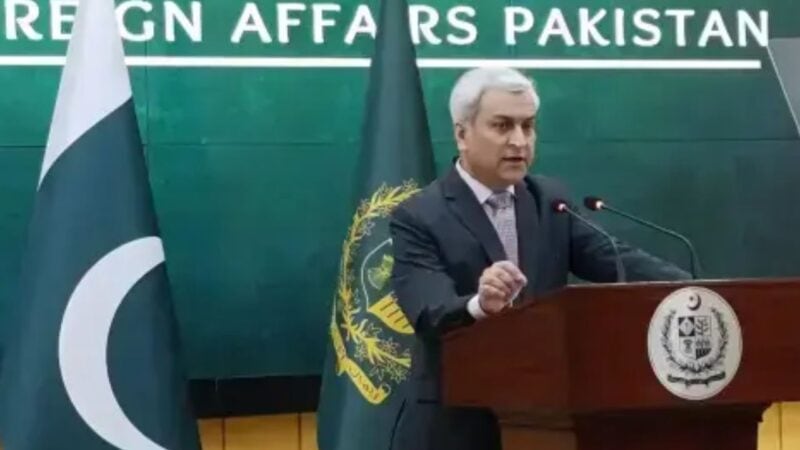
Pakistan has linked progress in relations with Afghanistan to concrete and verifiable action by the Taliban against the Tehreek-i-Taliban Pakistan (TTP) and other militant groups operating from Afghan soil.
Foreign Office (FO) spokesperson Tahir Andrabi said that Islamabad welcomed China’s continued efforts to facilitate dialogue with Afghanistan but maintained that outside mediation could not replace action by Kabul against terrorist groups.
“Pakistan appreciates China’s constructive and sustained engagement on the issues of Afghanistan,” Andrabi said, adding that Islamabad had “always remained positively engaged for constructive dialogue on the subject of Afghanistan.”
He maintained that progress depended on “The Afghan Taliban regime taking concrete and verifiable action against TTP, Balochistan Liberation Army (BLA), and other terrorist organisations operating from their soil into Pakistan.”
This was Andrabi’s final weekly media briefing before Sajjad Haider Khan takes over as FO spokesperson.
His comments came amidst increased diplomatic activity between Pakistan and Afghanistan, with Chinese Special Envoy Yue Xiaoyong visiting Islamabad to revive the Urumqi process aimed at preventing further escalation between the two countries. Afghan ambassador Sardar Shakeb was also invited to speak at the National Defence University (NDU).
However, Pakistan has maintained that it has not seen sufficient evidence of a change in the Taliban’s approach towards the TTP.
A recent report by the United Nations (UN) Analytical Support and Sanctions Monitoring Team said that the Taliban had moved around 2,000 TTP fighters and their families away from areas along the Pakistan border. The report also noted that Taliban leader Hibatullah Akhundzada had warned the group against carrying out attacks in Pakistan.
At the same time, the report said that Taliban support for the TTP continued as the group increased attacks and expanded its organisational structure.
Pakistan’s position remains that relocating TTP members does not address its concerns over the group’s command, training and logistical networks.
Andrabi also rejected suggestions that the Afghan envoy’s appearance at the NDU indicated an improvement in bilateral relations.
“Envoys visit academic institutions. This is not unusual,” he said. “Such interaction is no yardstick for measuring bilateral relations between the two sides. As such, we should not read too much into this interaction.”
He said there had been “no change” in Pakistan’s position and stressed that progress remained linked to written assurances from Kabul.
“Fact remains that progress in Pak-Afghan relations hinges on verifiable, written assurances from the Afghan side that their territory will not be used for terrorism against Pakistan,” he said.





