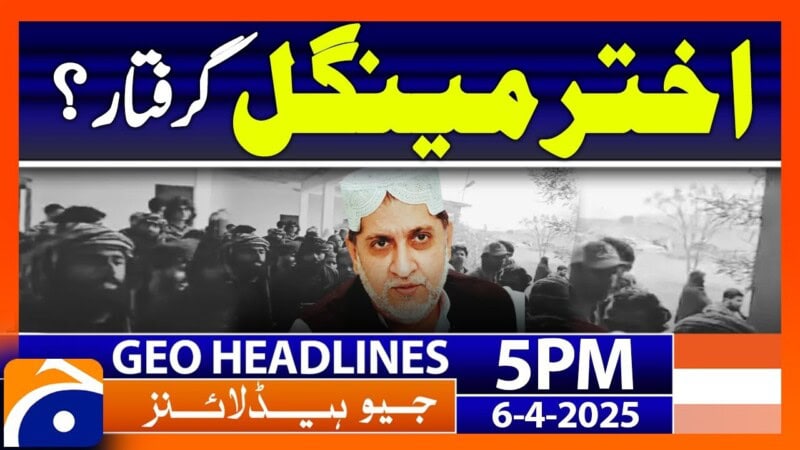
In the midst of ongoing tensions in Balochistan, the Balochistan National Party-Mengal (BNP-M) has found itself at the center of a heated protest as its supporters face severe opposition from the authorities. On April 6, 2025, protesters, who had begun their long march from Wadh to Quetta in late March, were met with tear gas, shelling, and other forms of force from the police as they attempted to continue their demonstration near Quetta. The clash comes amid rising frustration over the detention of political activists and calls for justice from the people of Balochistan.
Background of the Protest: Why BNP-M is Marching
The BNP-M’s protest is not just a random event; it is a response to the arrest of Baloch Yakjehti Committee (BYC) leaders, including Dr. Mahrang Baloch and Sammi Deen Baloch. These arrests sparked outrage among the Baloch population, leading to calls for their immediate release. The BNP-M, led by Sardar Akhtar Mengal, initiated the “long march” to Quetta on March 28, aiming to raise awareness about these arrests and demand justice for the detained activists.
The long march, which began in Wadh, was intended to be a peaceful protest aimed at highlighting issues like enforced disappearances and human rights violations in Balochistan. The main demand was the release of political leaders and activists, including Dr. Mahrang Baloch, who is a prominent figure in the Baloch nationalist movement.
Clashes with Police: Tear Gas and Shelling in Quetta’s Outskirts
As the BNP-M supporters made their way closer to Quetta, they were confronted by the local authorities. On April 6, the government ordered the use of tear gas and shelling to disperse the protesters. The BNP-M workers, who had been peacefully marching, found themselves under attack, with police firing tear gas and using other forceful measures to push back the crowd.
A social media post by BNP-M described the situation as “brutal,” stating that party workers and leaders had been subjected to violence while simply exercising their democratic right to protest. The posts showed images of workers running from tear gas and shelling, and videos appeared online of white smoke rising from areas where shelling had taken place. The party condemned the use of force and called it an attempt to crush their peaceful demonstration.
The incident highlighted the growing tensions between the government and the BNP-M, as the party’s leaders accused the government of using extreme measures to suppress the opposition. The government, on the other hand, claimed that these actions were necessary to maintain public order and prevent further unrest.
Government’s Warning: Arrest Threats and Roadblocks
The situation in Balochistan escalated further as the provincial government issued a stern warning to BNP-M’s leader, Sardar Akhtar Mengal. According to the government, if Mengal attempted to enter Quetta, he would be arrested under the Maintenance of Public Order (MPO) law. This law is typically invoked in situations where there is a perceived threat to public safety or when a breach of peace is expected.
Shahid Rind, a spokesperson for the Balochistan government, confirmed that Mengal had been informed early in the morning on April 6 that an arrest warrant had been issued for him under the MPO. Despite this warning, Mengal refused to comply and insisted that the protest would continue.
In an attempt to prevent the BNP-M from entering Quetta, the government set up roadblocks by placing shipping containers along the main entry routes to the city. These roadblocks were designed to halt the movement of BNP-M workers and to prevent them from reaching Quetta’s Red Zone. This area includes sensitive government buildings like the Balochistan Assembly and the Balochistan High Court.
Authorities also suspended internet services in several districts of Balochistan, including Quetta, Mastung, Kalat, and Khuzdar, likely to limit the ability of protesters to organize and communicate.
The Sit-In at Lakpass: A Stand Against Oppression
One of the key points of tension in this protest is the sit-in that has been taking place at Lakpass, Mastung, which has now entered its 10th day. The protesters have been camped out here, demanding the release of their leaders and an end to what they consider to be unjust arrests and human rights violations in Balochistan. Despite the presence of security forces and the government’s attempts to block their path, the BNP-M has remained resolute in its stance.
Sardar Akhtar Mengal and other party leaders have been vocal in their condemnation of the government’s actions. Mengal stated in a post on X (formerly Twitter), “The state has decided to crush us, but we won’t bow down.” The party announced that the sit-in would continue, regardless of the government’s attempts to stop them.
Calls for Provincial Shutdown: Protests Spread Across Balochistan
In response to the violence and roadblocks, the BNP-M has called for a province-wide shutdown. This includes roadblocks and a shutter-down strike across Balochistan. The goal is to bring the issue to the attention of the wider population and the international community.
According to former BNP-M Senator Sanaullah Baloch, the shutdown is a direct response to the government’s brutal tactics, including the use of force against unarmed protesters. He emphasized that the strike was a peaceful demonstration against what they perceive as the government’s unjust actions.
In a press conference held in Quetta, BNP-M leader Sajid Tareen reaffirmed the party’s stance, saying that they would continue to raise their voices against oppression. He expressed concerns that he might be arrested as well but vowed that the protests would not stop. Tareen also announced that the party would continue to work with other political groups to plan further protests if the situation worsened.
Support from Other Political Parties and International Attention
The BNP-M’s protest has gained support from other political parties, such as the Awami National Party (ANP) and the Jamhoori Watan Party (JWP). These parties have joined in solidarity with the BNP-M’s struggle, criticizing the government’s actions and supporting the calls for justice.
Veteran politicians, such as Afrasiab Khattak, have also spoken out in favor of the BNP-M’s cause, raising concerns about the increasing militarization of Balochistan and the widespread suppression of peaceful protests.
As the situation continues to unfold, international human rights organizations are closely monitoring the developments. The use of force against peaceful protesters and the crackdown on political dissent have raised alarms about the human rights situation in the region.
Conclusion:
The ongoing standoff between the BNP-M and the Balochistan government shows no signs of easing. With the government’s crackdown on the protestors and the BNP-M’s refusal to back down, the situation remains tense. The people of Balochistan, under the leadership of the BNP-M, are determined to continue their struggle for justice, despite the odds stacked against them.
As the protests spread across the province, it remains to be seen how the government will respond to these growing calls for change. Will the government listen to the voices of the people, or will the confrontation escalate further? Only time will tell, but the people of Balochistan are resolute in their demand for justice and an end to what they see as years of oppression and neglect.
The events unfolding in Balochistan serve as a reminder of the importance of peaceful protest, human rights, and the need for governments to listen to the voices of their people.
Read Also: Mukesh Ambani, Isha Ambani & Shloka Mehta Shine at Mumbai Event: Viral Moments and Fashion Praise