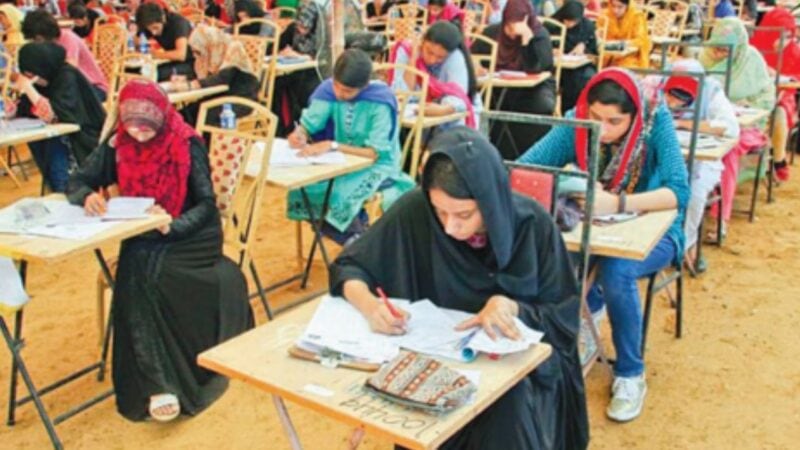
The number of students appearing for the Medical and Dental College Admission Test (MDCAT) has dropped by nearly 33 percent in four years, with the Pakistan Medical Association (PMA) warning that young people are increasingly losing interest in medicine as a career.
Official figures from the Pakistan Medical and Dental Council (PMDC) show that MDCAT candidates fell from 204,253 in 2022 to around 138,000 in 2026.
The number of candidates stood at 194,133 in 2021 before rising to 204,253 in 2022. It then fell to 180,534 in 2023, around 182,000 in 2024 and 140,071 in 2025.
The PMA said that the decline continued despite repeated extensions to the registration deadline as after the MDCAT was rescheduled for Sept 20, the PMDC reopened registration for five days from Aug 17 to 21 to accommodate students affected by regional disruptions and administrative delays.
However, only 2,063 additional candidates registered during the extended period, taking the total to just over 138,000.
The PMA said that the limited response indicated a “structural decline in interest” in medicine rather than a problem caused only by missed deadlines or administrative issues.
The association attributed the trend to rising fees at private medical and dental colleges, limited financial prospects for young doctors, delays in house-job stipends and a shortage of paid postgraduate residency positions.
It also raised concerns over violence against healthcare workers in public hospitals and the absence of a federal law to protect medical professionals.
According to the PMA, students with a pre-medical background are increasingly opting for fields such as computer science, artificial intelligence, biotechnology and health data analytics because they offer better career progression, starting salaries and international opportunities.
PMA Secretary-General Dr Abdul Ghafoor Shoro urged federal and provincial health authorities and the PMDC to address the economic and security issues affecting the medical profession instead of lowering MDCAT passing standards to fill vacant seats.
The association called for a cap on private medical college fees, timely payment of stipends, regular medical officer positions and the introduction of a federal Healthcare Professionals Protection Act.
The PMA also warned that failing to address these issues could lead to a serious shortage of doctors over the next decade and put further pressure on the country’s public healthcare system.





