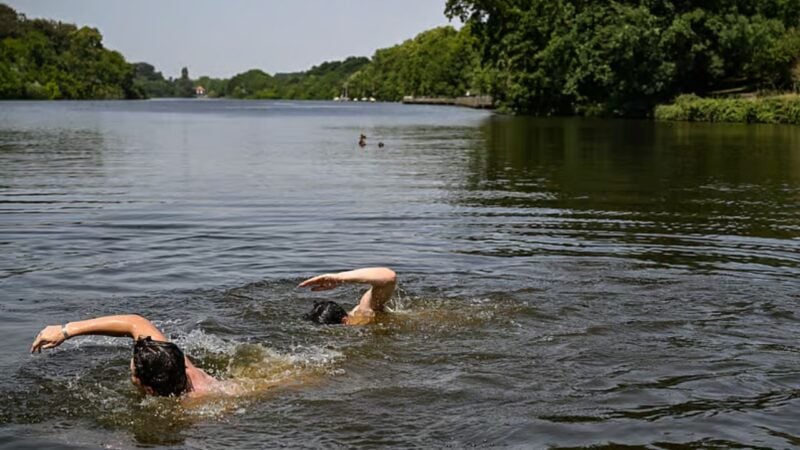
A lethal heatwave gripping Europe has left temperatures spiking to record-breaking highs and a surge in fatalities as the continent struggles to manage a climate crisis of exceptional intensity. In France, officials have confirmed that 40 people have drowned while attempting to cool off in unsupervised waters since June 18, with the majority of victims being young people.
Across the English Channel, 10 young boys tragically lost their lives to drowning last week alone while seeking relief from the extreme heat.
France has officially recorded its hottest day since measurements began in 1947, with thermometers in the Landes department reaching a staggering 44.3C. The intensity of the heat has pushed public infrastructure to its limits; the Louvre and the Eiffel Tower have been forced to restrict opening hours, with museum management noting that their historic structures are simply not adapted to such extreme conditions.
In the southwestern region of France, the Golfech nuclear plant was forced to deactivate a reactor as river temperatures used for cooling rose above safe operating levels.
The heatwave, described by climate scientists as a slow-moving, high-pressure “thermal dome” drawing air directly from the Sahara, is showing no signs of immediate respite. Across the UK, Met Office has issued rare red warnings, while in Italy, health authorities have placed 15 cities under emergency alerts as electricity grids suffer from the surge in air-conditioning demand.
Addressing the crisis at a London Climate Action Week event, UN Secretary-General António Guterres delivered a sobering warning: “London isn’t just calling. It’s cooking.” He emphasised that the escalating temperatures and the associated energy crises are two sides of the same coin, driven by a global addiction to hydrocarbons.