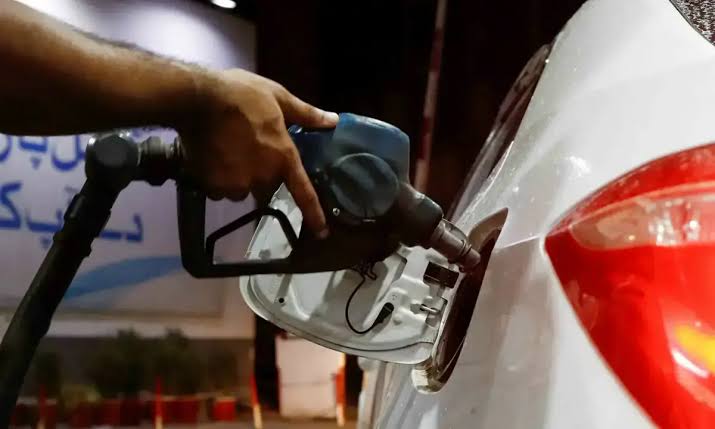
Petrol prices are up by Rs5.44 per litre and diesel by Rs31.05, effective from Saturday, as Pakistan moves to daily fuel pricing, a shift the government has tied directly to the widening war between the United States (US) and Iran.
The Petroleum Division notified the increase on Friday, pushing petrol to Rs316.15 per litre and High-Speed Diesel (HSD) to Rs354.35, with the new rates holding until July 20. Both fuels remain below the peaks hit in April, when diesel touched Rs520.35 and petrol reached Rs458.41, prices that began climbing from Rs281 and Rs266 respectively after the US-Iran war broke out on February 28.
Petroleum Minister Ali Pervaiz Malik announced the shift to daily pricing at a press conference alongside Information Minister Attaullah Tarar, saying that the cabinet and prime minister had handed the Oil and Gas Regulatory Authority (OGRA) the task of setting rates each day based on international trends.
He said that OGRA would “not just publish the fuel rates on its website that are used to determine prices, but also publish the factors leading to the price that we see at each petrol pump.”
Malik added that the daily figure would be based on a seven-day average of global prices, and that rates would move without requiring his approval, Tarar’s, “or anyone else’s.”
A committee under his leadership had met four times and would present a plan on post-war energy pricing within 15-20 days. He also said that Turkish Petroleum will begin extracting oil and gas in Pakistan in October, the first such project in 20 years.
The All Pakistan Petrol Pump Owners’ Association has rejected the move. Vice Chairman (VC) Noman Ali Butt said in a video statement that “all stakeholders should be taken into confidence before fixing rates with oil marketing companies,” adding that roughly 15,000 pump owners nationwide face concerns over tankers, transport and pricing, and that “the government should consult petrol pump owners instead of making unilateral decisions.”
The association has said it will consider a strike next week if the policy is not withdrawn.
Tarar, addressing the same press conference, said that Pakistan avoided fuel queues seen in other countries during the peak of the crisis because the prime minister arranged reserves in advance and the federal government cut its development budget to fund Rs129 billion in subsidies.
He rejected claims that levies had risen sharply, saying they remain below pre-war levels and said oil marketing companies found hoarding face action from the Federal Investigation Agency (FIA), with one case acted on “just yesterday.” He called a shift to electric bikes and vehicles “inevitable” for cutting the import bill.
The renewed price pressure follows a fresh round of war in the Gulf, Tehran resumed its blockade of the Strait of Hormuz and Washington blockaded Iranian ports from Wednesday, ending the truce reached in June.
Petrol, used mainly in private transport, rickshaws and two-wheelers, weighs heaviest on middle and lower-middle-income households, while diesel price moves affect heavy transport, power plants and generators.