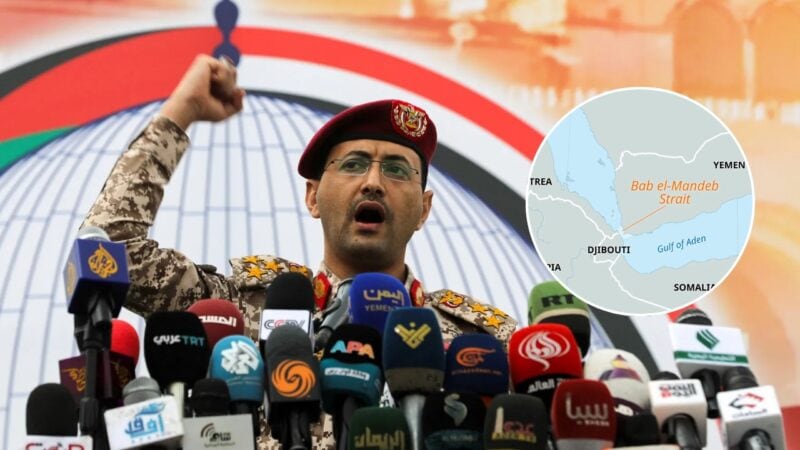
Yemen’s Houthis have announced that they are imposing a naval blockade against Saudi Arabia, opening another front in the conflict between the United States (US) and Iran while threatening global energy supplies.
Houthi military spokesman Yahya Sarea, during an address broadcast on television, said, “The armed forces declare a maritime embargo against the criminal Saudi enemy, based on the equation of ‘an eye for an eye’, effective immediately.”
Sarea stated that the decision responds to “an unjust and oppressive siege on our dear people for nearly 12 years, plundering our resources and imposing a comprehensive blockade on our ports and airports by land, sea, and air.”
Sarea warned that “Any foolish act committed by the reckless Saudi enemy through all escalation will be met with a comprehensive and decisive escalation.”
Following the statement, the deputy head of the Houthi media office, Nasruddin Amer, published a post on X stating that forces were “closing Bab al-Mandeb to Saudi enemy ships.”
The Saudi Foreign Ministry condemned the allegations, stating that the Kingdom will take “all necessary measures to protect its ships in accordance with international law.”
The Saudi-led coalition in Yemen stated that it would respond with force and began implementing protection measures for vessels moving through the Bab el-Mandeb Strait. The waterway serves as an export corridor for Saudi oil after the closure of the Strait of Hormuz.
The escalation follows recent military strikes between the sides. The Houthis launched missiles at Abha airport in Saudi Arabia following air strikes on the airport in Sanaa. The Saudi-backed Yemeni government claimed the Sanaa airport strikes, stating that the action aimed to prevent an Iranian aircraft from landing without authorization.
Iran pushed the Houthis to close the Bab el-Mandeb gateway to the Red Sea if the US continues targeting Iranian power infrastructure.
A full closure of the strait would remove seven percent of global oil supply, leaving Saudi oil exports unable to exit the region. The disruption adds to a ten percent reduction in global oil shipments caused by the war in the Gulf.
Oil prices rose after the Houthi statement before falling as traders evaluated prospects for diplomacy.





