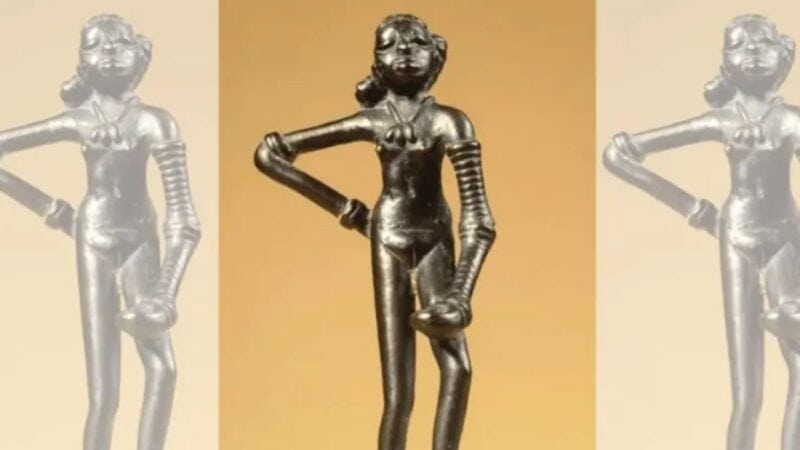
India has pulled a modified image of the Dancing Girl, an iconic bronze sculpture from the Indus Valley civilisation, from a grade nine textbook after historians and educationists pushed back against the change, BBC News reported.
The figurine, one of the most recognised artefacts from the Indus Valley civilisation, depicts a girl standing with one hand on her hip. It was discovered at Mohenjo Daro, among the largest settlements of the ancient civilisation, located in present-day Pakistan.
In the newly released textbook, the sculpture’s torso had been covered with dark shading, obscuring its anatomical features. The move drew sharp criticism from historians, who accused the National Council of Educational Research and Training (NCERT)- which drafted the book- of disfiguring the artefact.
NCERT director Dinesh Saklani told reporters the altered image would be withdrawn. Officials later confirmed the original image had been restored in the digital version and that new print editions would carry the unedited photo as well.
The Dancing Girl has featured in Indian school textbooks for decades, including in earlier NCERT editions, without any censorship of its torso.
The Indian Express, which first broke the story, ran an editorial noting the sculpture “has been significant not because it conforms to a blindfolded standard of modesty but because it embodies poise, confidence and unmistakable presence,” adding that NCERT would do better to trust students and women “with a little more agency”.