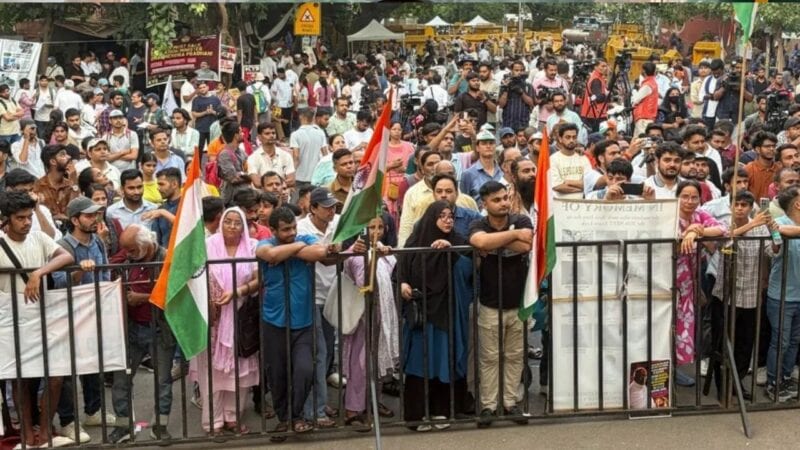
Hundreds of students and young professionals have intensified protests in New Delhi, demanding the resignation of Education Minister Dharmendra Pradhan over the National Eligibility cum Entrance Test (NEET) paper leak scandal that forced the cancellation of the country’s premier medical entrance examination.
Demonstrations at Delhi’s Jantar Mantar have entered their second week, with protesters refusing to leave until the minister accepts responsibility for what they describe as a major failure of India’s examination system.
The movement gained further momentum after educationist and climate activist Sonam Wangchuk joined the protest and began an indefinite hunger strike.
Protesters say repeated examination paper leaks have destroyed the futures of thousands of students, many of whom spend years preparing for highly competitive entrance tests.
Organisers have also erected a memorial wall displaying photographs of students whose families claim they died by suicide following the cancellation of the examination.
Protests are being coordinated by a youth-led online movement that emerged after controversial remarks by India’s Chief Justice Surya Kant referring to some unemployed young people as “cockroaches”.
The remarks sparked widespread backlash and quickly evolved into a broader campaign against unemployment, examination failures and government accountability.
The Indian government has rejected demands for Pradhan’s resignation. The education minister has dismissed the protesters as politically motivated, while leaders of the ruling Bharatiya Janata Party (BJP) have accused the movement of attempting to disrupt the country.
Although Indian authorities conducted a fresh NEET examination in June, protesters argue that merely holding a re-test does not address systemic failures that have repeatedly undermined the credibility of competitive examinations.
As crowds continue to gather in large numbers despite temperatures exceeding 40°C, organisers say the campaign will continue until accountability is ensured and meaningful reforms are introduced to restore confidence in India’s education system