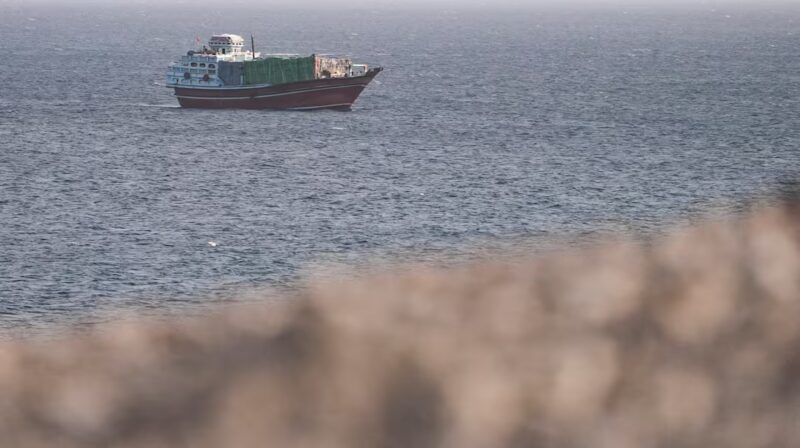
Iran has ruled out an Omani proposal for joint management of the Strait of Hormuz, stating that the plan holds no chance of success. A senior Iranian official stated to an international media platform that the United States (US) and Saudi Arabia pressured Oman into advancing “unrealistic plans” regarding the waterway.
Iranian Deputy Foreign Minister (FM) Kazem Gharibabadi stated that Iran will “no longer be able to exercise sovereignty” if it opens a southern lane closer to the Omani coast. Gharibabadi added, “Any European ship that wants to come near the Strait of Hormuz is our legitimate target.”
The Iran Revolutionary Guards (IRGC) navy halted three oil tankers in the waterway. Iranian News agency reported that “three violating oil tankers, which ignored our warnings and continued sailing an unsafe and illegal route, were struck and brought to a halt.”
A US official stated that discussions regarding a coordination deal include “no tolls and no fees for passage through the Strait of Hormuz,” adding that Oman and the US rejected demands from Iran.
Analytics firm Kpler reported that 37 commodity ships passed through the Bab el-Mandeb strait on Tuesday, while a few ships moved through the Strait of Hormuz. United States Central Command (CENTCOM) redirected 18 commercial vessels, disabled two vessels, and boarded two vessels during a naval blockade of Iranian ports.
To bolster short-range air defense capabilities, Iran arranged a delivery of 300 to 400 shoulder-fired air defense systems from China, including QW-12 and FN-16 missiles, valued between $60m and $70m.
Iran launched ballistic missiles toward US forces and a US base in Jordan. CENTCOM intercepted the missiles. The Jordanian Armed Forces stated that its air defenses “dealt with five missiles coming from Iran that targeted the kingdom’s territory” and shot them down.
Qatar’s Ministry of Foreign Affairs condemned the actions against Jordan as a “flagrant violation” of sovereignty, a “blatant breach” of international law and the UN Charter, and a “dangerous escalation.”
European Union (EU) foreign policy chief Kaja Kallas spoke with Iranian Foreign Minister (FM) Abbas Araghchi regarding the Gulf and Russia’s war against Ukraine. Kallas stated on X, “In the Gulf, the reprieve from fighting can buy mediators time to find a way back to diplomacy and prevent a return to full-scale war.” Kallas added, “I made it clear that the aggression against French diplomats in Tehran is unacceptable. All EU member states have condemned these actions.”
Araghchi spoke with Ukraine FM Andrii Sybiha following a strike on an Iranian ship in the Caspian Sea. Araghchi posted on X, “Iran does not seek escalation either, but made clear that any attack on our citizens or interests is unacceptable. There must be restitution for losses.”
Sybiha stated on X, “I emphasised the necessity to refrain from any escalatory steps, as well as to end any support for Russia’s war against Ukraine. This war is illegal and it must end.”
Iranian ambassador to China Abdolreza Rahmani Fazli stated in Beijing that Iran retains “no confidence” in the US, adding, “We have always emphasised that, in addition to our will to defend, we are also ready to negotiate. However, given the US’s lack of commitment to the [Islamabad] memorandum of understanding and its reneging on its commitments, Iran has no confidence in the American side.”





