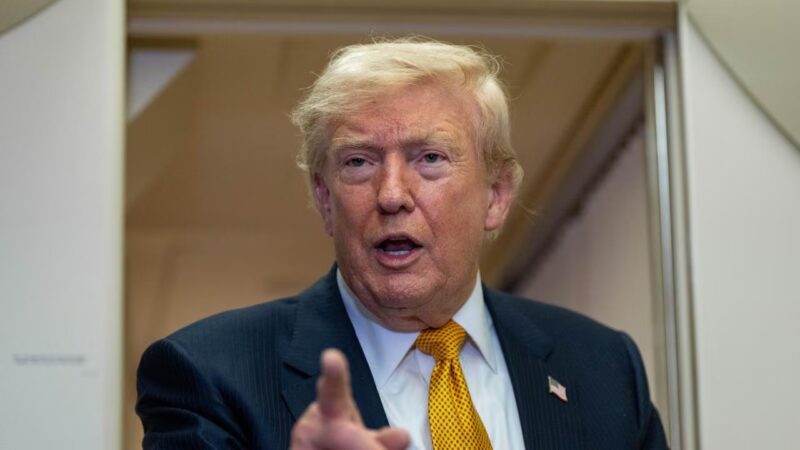
Heightened tensions between United States (US) and Iran have put the region back on edge, marked by explicit military threats from US President Donald Trump and counter-warnings from top Iranian leadership. The development has triggered urgent diplomatic interventions from regional partners, including Pakistan and Qatar, who are moving to preserve fragile peace agreements.
The friction intensified after Trump claimed Iran is actively plotting against his life. Writing on Truth Social, Trump asserted that “1000 Missiles are Locked and Loaded and aimed at the Islamic Republic of Iran,” warning that any attempt on his life would result in the US military moving to “completely decimate and destroy all areas of Iran.”
Trump later told The New York Post that he has “left instructions, if anything happens, to just literally bomb them at levels that they’ve never seen before,” pointing to targeted assassination threats displayed during a funeral ceremony for late Supreme Leader Ali Khamenei.
Iran’s Ministry of Foreign Affairs spokesperson Esmaeil Baghaei announced that their military is tracking all hostile movements.
Baghaei stated that the armed forces “on the coasts, islands, borders and other sensitive points of the country, with vigilant and watchful eyes, keep the enemy’s movements under surveillance.”
Concurrently, Iran’s Parliament Speaker and lead negotiator Mohammad Bagher Ghalibaf dismissed any possibility of de-escalation through capitulation, stating, “Everyone should know that this conflict will never end with Iran’s surrender.” Ghalibaf added that if the US walks back from previous agreements, Iran is prepared for a “full-scale defence.”
The diplomatic framework between the two nations is also fracturing over compliance issues and backchannel communications.
Trump recently asserted that both sides had agreed to continue bilateral dialogue despite the friction.
However, Baghaei denied that Tehran had requested direct negotiations with Washington, clarifying that Iran had only accepted a visit from a Qatari mediator.
Iranian Foreign Minister (FM) Abbas Araghchi further accused Washington of breaching the existing truce, stating that “Iran has so far kept its word, unlike the so-called US Treasury Secretary who is violating Para 9 of the MoU” by deploying extra military forces to the region.
Araghchi is now traveling to Oman for emergency talks focused specifically on security and shipping safety in the Strait of Hormuz.
Iran is also expanding its diplomatic pushback to regional neighbors, accusing the United Arab Emirates (UAE) of backing American military positions.
Iran’s Deputy Foreign Minister (DPM) Kazem Gharibabadi targeted a newly published US Department of Commerce document that eases export regulations for the UAE, labeling the policy change a “scandal document” granted “in return for its support of military aggression against Iran.”
Gharibabadi warned of direct legal consequences, stating, “The UAE must be held accountable.”
As regional stability wavers, Prime Minister (PM) Shehbaz Sharif initiated separate emergency telephone calls with Qatari Amir Sheikh Tamim bin Hamad Al Thani and Iranian President Masoud Pezeshkian.
In both communications, Sharif expressed concern over the volatile situation and pressed all sides to “exercise restraint and refrain from any actions that could undermine peace.”
During his conversation with Pezeshkian, Sharif emphasized the “urgent need to restore regional peace” and urged adherence to the Islamabad Memorandum of Understanding (MoU), which he described as “an enduring framework for promoting mutual understanding.”
Sharif added that Islamabad stands ready to play an “honest and sincere role” to facilitate direct dialogue between Washington and Tehran.





