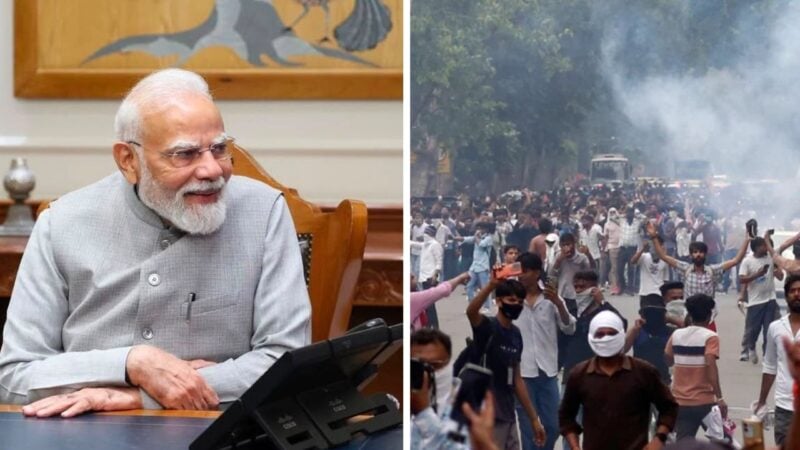
Indian Prime Minister (PM) Narendra Modi has announced on Thursday that the government will set up fast-track courts to speed up trials and punishment for those responsible for leaking examination papers.
The move marks his first direct response to weeks of student protests in Delhi and growing calls for Education Minister Dharmendra Pradhan to resign.
Modi shared the announcement on social media. “We have decided to set up fast-track courts to ensure swift and stringent punishment for those involved in paper leaks,” he wrote. “Have directed concerned authorities and officials to take all necessary steps in this regard. This continues our series of steps for safeguarding the interests of students.”
He added that “nothing is more important than the welfare and future of our youth.”
His comments came as the Cockroach Janata Party (CJP), which has led the protest movement for over a month, kept piling pressure on the government, demanding accountability over alleged irregularities in the NEET examination and Union Education Minister Dharmendra Pradhan resignation.
On July 20, the party organised a march toward Parliament that ended in clashes between police and demonstrators at Jantar Mantar.
Climate activist Sonam Wangchuk has been on an indefinite hunger strike since June 28 in solidarity with the protesting students. Delhi Police moved him from the protest site to Safdarjung Hospital on July 18. Following a Delhi High Court order, he was later transferred to Medanta Hospital in Gurugram for further care.
Two days after the march, on July 22, protesters continued to gather at Jantar Mantar demanding Pradhan’s ouster. Opposition leaders have also weighed in. Samajwadi Party chief Akhilesh Yadav questioned why a health minister, not the education minister, addressed the media during the ongoing unrest, suggesting it revealed the government’s discomfort with the issue.
Wangchuk has since said that he will end his hunger strike only if the Centre assures no legal action will be taken against those who took part in the July 20 march.
The protests, now well into their second month, show no sign of easing as the government tries to shift attention toward judicial reforms in examination-related crime.





