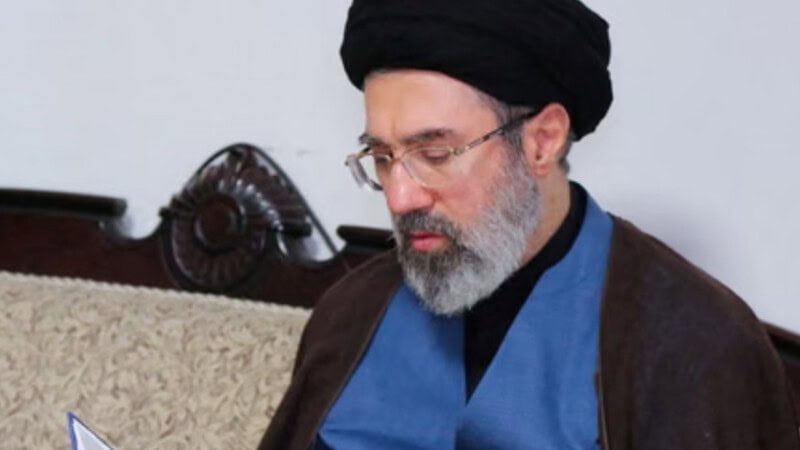
Iran’s Assembly of Experts has named Mojtaba Khamenei as the country’s new Supreme Leader, replacing his father, Ayatollah Ali Khamenei, who was assassinated in the opening salvos of a United Stated (US)-Israeli attack nine days ago. The appointment was confirmed by state media and the Isna news agency, marking a significant transition as the conflict expands across the Middle East.
The Iranian Revolutionary Guard Corps (IRGC) and the country’s armed forces have pledged “complete obedience” and “self-sacrifice” to the new leader. High-profile officials, including Parliament Speaker Mohammad Baqer Qalibaf and National Security Council Secretary Ali Larijani, called the decision precise, stating that following Mojtaba Khamenei is a “definitive religious and national obligation.”
On the ground, the war has intensified. Iran launched its first wave of missiles under the new leadership, targeting Tel Aviv, the Negev desert, and US air bases. The IRGC described this as the “29th wave of Operation Honest Promise 4.”
Simultaneously, the US military confirmed its seventh service member was killed in action during Operation Epic Fury, following injuries sustained in Saudi Arabia on March 1.
The economic fallout has been immediate. Asian equities plunged as oil prices soared 30 percent, with West Texas Intermediate hitting $118.88 per barrel.
US President Donald Trump, posting on Truth Social, dismissed the spike as a “very small price to pay,” adding that “only fools would think differently.” Trump has maintained that only the “unconditional surrender” of Iran will end the war.
Regional spillover continues to affect neighboring states. In Bahrain, an Iranian drone attack on the island of Sitra wounded 32 civilians, including children.
The UAE’s Ministry of Defence reported engaging incoming drones and missiles, while Qatar intercepted a missile attack over Doha. Saudi Arabia also destroyed two drones heading toward the Shaybah oil field.
The human cost has reached 1,332 civilian deaths, according to Iran’s UN Ambassador Amir Saeid Iravani. The Iranian army further reported that 104 people were killed in a US attack on an Iranian warship last week.
In Isfahan, security officials stated that eight people, including a woman, died during Israeli strikes involving over 80 fighter jets.
Amid the violence, Iranian President Masoud Pezeshkian issued a formal apology to neighboring countries for retaliatory strikes but remained defiant against the US and Israel. “Our Iran, our country, will not bow easily in the face of bullying,” he stated, accusing the adversaries of trying to divide Islamic nations.
Foreign Minister Abbas Araghchi rejected President Trump’s demand to have a say in picking the next Supreme Leader, telling an international media outlet that the US must apologize for starting the war. “We allow nobody to interfere in our domestic affairs,” Araghchi said.
The conflict, which began on February 28 with “pre-emptive” joint strikes by the US and Israel, shows no sign of de-escalation. Iran’s military has warned that if energy infrastructure continues to be hit, it will target oil sites across the region. “If you can tolerate oil at more than $200 per barrel, continue this game,” warned military spokesperson Ebrahim Zolfaghari.
As the Strait of Hormuz remains blocked, analysts report that at least 10 vessels have been attacked in the strategic waterway. France is scheduled to host a G7 finance meeting today to review the situation from an economic perspective, while Russia and the UAE have called for an end to civilian casualties on both sides.