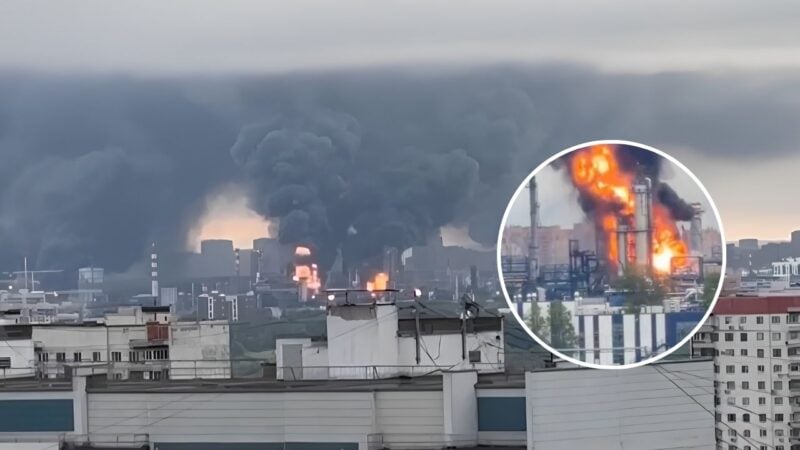
Parts of the Russian capital Moscow were coated in a fine, oily drizzle after Ukraine launched its largest drone attack since the beginning of the full-scale conflict, targeting a major oil refinery. Conflicting reports now claim that it was caused by Russian air defences trying to intercept a swarm of Ukrainian drones. Close to 200 drones were directed at the Moscow region alone, wounding 17 people and sending columns of thick, toxic smoke over the city’s skyline.
The air strike directly hit the Kapotnya oil refinery in south-east Moscow, marking the third time the facility has been struck in a month. The impact triggered massive explosions, with social media footage showing a storage silo roof blown dozens of metres into the air.
Falling debris also ignited a nearby shopping centre and struck a residential high-rise building. Local residents subsequently reported that a light, petroleum-laced rain left black spots on their clothing and coated car parks in a dark sheen.
While Moscow municipal authorities officially denied the occurrence of an oil rain, the city’s state Telegram channel urged residents in the affected southeastern districts to seal their windows.
Families, elderly citizens, and asthmatics were advised to urgently evacuate the immediate area. The attack severely disrupted logistics, forcing the temporary closure of Moscow’s four major airports and causing the cancellation or delay of over 500 flights.
The Kremlin stated that its air defences intercepted and destroyed nearly 1,000 drones and four cruise missiles nationwide over a 24-hour window, though an oil depot in Rostov was also hit, resulting in one fatality.
Ukrainian President Volodymyr Zelensky confirmed that the operation was a direct retaliation for a recent Russian assault on Kyiv that damaged the historic Pechersk Lavra monastery, warning that further strikes would continue to bring the realities of the war directly to the Russian population.