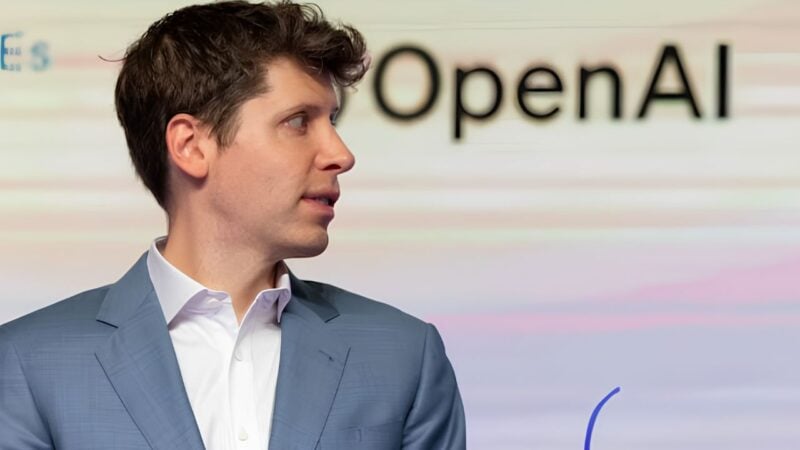
OpenAI has initiated early-stage discussions to grant a five per cent equity stake to the United States (US) government in a conceptual proposal, spearheaded by Chief Executive Sam Altman.
According to reports, the proposal aims to smooth industry relations with President Donald Trump’s administration while distributing the economic windfalls of artificial intelligence directly to the American public.
CEO Altman envisions a broader framework where all major domestic AI developers including Anthropic, Google and Meta would cede an identical five per cent holding to a state-controlled investment vehicle.
The proposed structure, reports said, draws inspiration from models like the Alaska Permanent Fund, which routinely reinvests commodities wealth to distribute public dividends.
Based on OpenAI’s recent multi-billion-dollar valuation benchmarks ahead of its anticipated stock market debut, a five per cent holding could represent tens of billions of dollars in public equity.
The strategy emerges in the midst of intensifying regulatory scrutiny from Washington concerning cybersecurity vulnerabilities, the rapid expansion of physical data centres and direct competition from lower-cost Chinese open-source models.
Citing national security concerns, US federal authorities have also temporarily restricted access for Anthropic’s latest models, underscoring the intensifying friction between Silicon Valley and government oversight.
While OpenAI and Anthropic have previously published policy papers advocating for public wealth funds to mitigate AI-driven economic displacement, any formal execution of this equity plan would likely require an act of Congress.
Altman has reportedly engaged in preliminary policy talks with President Trump, Commerce Secretary Howard Lutnick and Treasury Secretary Scott Bessent, alongside left-wing Democratic Senator Bernie Sanders, who has separately advocated for independent public oversight of the sector.