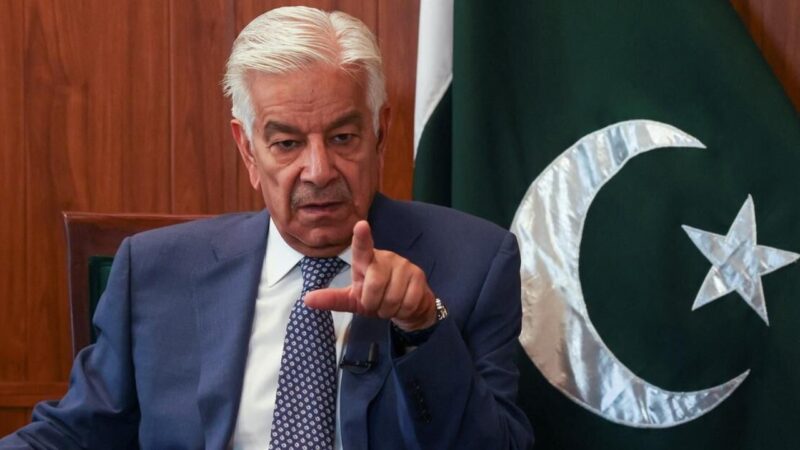
Defence Minister Khawaja Asif has said Pakistan’s trilateral defence pact with Saudi Arabia and Turkiye could become operational if the conflict in Yemen spills over into Saudi territory, stressing that Pakistan is “bound to react” under the agreement in the event of aggression against a member state.
“There is no ambiguity” in the pact, Asif said on a private news show on Tuesday night, adding that Pakistan was “bound to react under the pact” in the event of aggression against a member state.
“This is a joint defence pact. And unprovoked aggression or spillover of whatever is happening in Yemen into Saudi Arabia, definitely, the pact will become operational,” he said.
The remarks followed attacks claimed by Yemen’s Houthi rebels on four cities in southern Saudi Arabia on Tuesday.
The group said it had fired dozens of ballistic missiles at targets including Abha International Airport, King Khalid air base and facilities belonging to Saudi state oil company Aramco.
Saudi authorities said more than 70 people were wounded, while oil installations were set ablaze.
Saudi Arabia responded with strikes on Taiz and Marib provinces and the Jubah district east of Sanaa.
Riyadh’s foreign ministry said it would take “all necessary measures” to defend the country’s sovereignty.
The defence pact, signed by Pakistan, Saudi Arabia and Turkiye on August 7, is intended to strengthen collective deterrence and provides for an attack against one signatory to be treated as an attack against all three.
Asif said the agreement was defensive rather than “aggressive in nature”, adding that the three countries had established their respective strengths as a deterrent.
He added that Pakistan would have responded even if its defence commitment to Saudi Arabia had been bilateral.
Asif maintained that the situation would come under control and that the Houthis would recognise the consequences of extending the Yemen conflict into Saudi Arabia.
He also expressed hope that stalled United States-Iran negotiations could resume, saying “all doors have not closed” despite the current stalemate and noting that indirect engagement continued.





