Pakistan has confirmed that it is engaged in talks with Afghanistan in the Chinese city of Urumqi.
Foreign Office (FO) spokesperson Tahir Andrabi stated on Thursday that Pakistan’s participation reflects its position on pursuing dialogue, but stressed that Kabul must “demonstrate visible and verifiable actions” against groups operating from its territory.
The talks come after a halt in diplomatic engagement between the two sides following Pakistan’s launch of Operation Ghazab lil-Haq on February 26, targeting militant hideouts inside Afghanistan.
Speaking at the weekly briefing, Andrabi said that the meeting between senior officials of both countries was focused on exchanging views on the recent escalation.
He noted that no major breakthrough was expected, though efforts were underway to encourage confidence-building measures, including the reopening of trade routes.
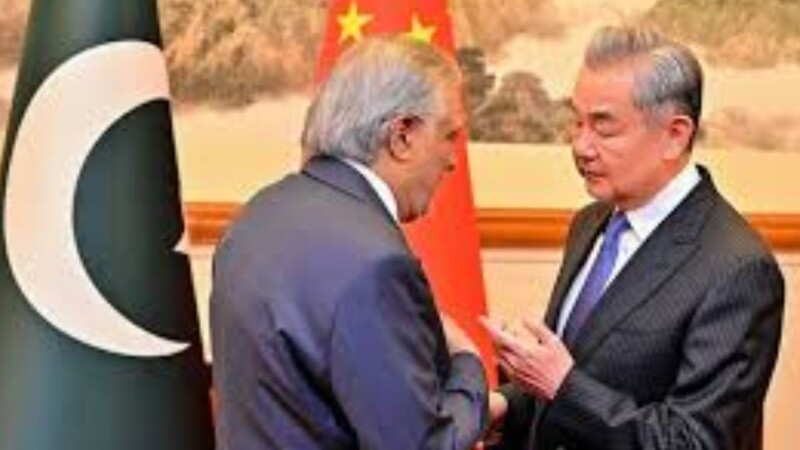
Andrabi confirmed that the talks were discussed during Deputy Prime Minister (PM) and Foreign Minister (FM) Ishaq Dar’s recent visit to Beijing, which took place at the invitation of Chinese Foreign Minister Wang Yi.
He stated that Pakistan had dispatched a delegation to Urumqi “in line with its consistent position and longstanding practice of supporting a credible process that can lead to [a] durable solution … to stop border terrorism from Afghanistan”.
“Our participation is a reiteration of our core concerns,” Andrabi stated. “The burden of real process, however, lies with Afghanistan, which must demonstrate visible and verifiable actions against terrorist groups using Afghan soil against Pakistan.”
The FO spokesperson also referred to Dar’s visit to Beijing, stating that it underscored the importance Pakistan attaches to its ties with China. He noted that the visit took place despite medical advice for rest after Dar sustained a hairline fracture during earlier quadrilateral consultations in Islamabad.
During the visit, Pakistan and China announced a five-point initiative aimed at restoring regional stability, calling for an immediate cessation of hostilities and the start of peace talks.
“It is an effort towards ending war, it is an effort towards cessation of hostility and it is an effort towards paving the way for a sustainable pathway towards finding the lasting settlement of the ongoing hostilities,” Andrabi stated.
He added that the initiative received a positive response from regional stakeholders.
Separately, Andrabi referred to quadrilateral consultations involving the foreign ministers of Pakistan, Saudi Arabia, Turkiye and Egypt, stating that Pakistan “highly values” its relations with these brotherly countries.
“These interactions provided an opportunity to further strengthen Pakistan’s cooperation and coordination with these two[sic] countries across multifaceted areas of mutual interest,” he added.
The meeting, chaired by Dar, focused on coordinated efforts to reduce tensions linked to the ongoing United States-Iran conflict, which has entered its first month.
Pakistan has witnessed an increase in militant activity since the Afghan Taliban returned to power in 2021.
Islamabad has repeatedly called on the Afghan authorities to act against groups, including Tehreek-i-Taliban Pakistan (TTP), accused of using Afghan territory for attacks.
Operation Ghazab lil-Haq was launched following cross-border firing from Afghan territory. Pakistan observed a temporary pause in the operation from March 18 to 23 on the occasion of Eidul Fitr, with the FO later stating that the operation would continue “until its objectives are achieved”.
De-escalation efforts by Saudi Arabia, Qatar and Turkiye were cited as factors behind pauses announced by both sides, according to official statements.