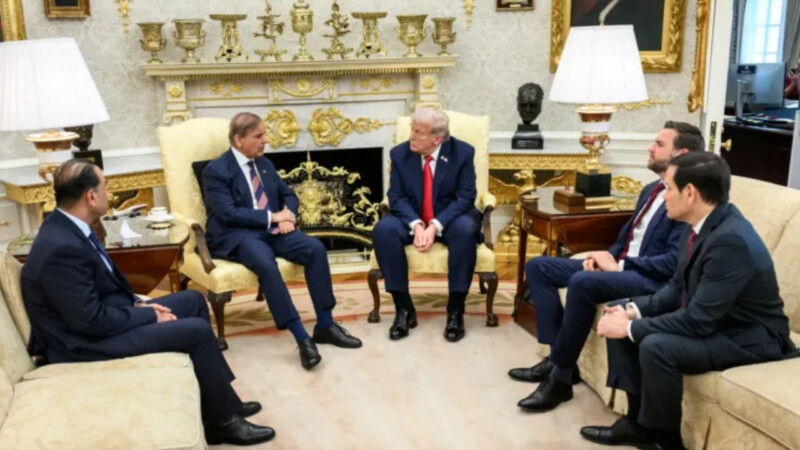
Pakistan has delivered a ceasefire proposal from the Trump administration to Iran, according to Al Jazeera sources and senior Iranian officials.
The document, handed over by Islamabad, contains specific United States (US) demands aimed at de-escalating the ongoing war in the Gulf.
While the exact details of the proposal remain undisclosed, reports suggest it may align with a 15-point US plan previously circulated.
Officials from Washington and Tehran are expected to meet in Islamabad in the coming days. A senior Iranian official confirmed that both Pakistan and Turkey are being considered as venues for diplomatic discussions.
Former Pakistani Ambassador to the US and United Nations (UN) Masood Khan said that Pakistan has earned its position as a lead mediator by maintaining an equidistant posture. He noted that Pakistan previously facilitated sensitive conversations between the two sides last June.
Despite these diplomatic movements, Iran’s Ambassador to Pakistan Reza Amiri Moghadam denied that direct or indirect negotiations have taken place. He described the reports of progress as “Trump’s claims”, but acknowledged that friendly countries were engaged in consultations to end the hostilities.
On the ground, military activity continued to expand. The Islamic Revolutionary Guard Corps (IRGC) launched its 80th wave of strikes, targeting northern and central territories and US bases.
Iranian military spokesperson Ebrahim Zolfaqari questioned the US claims of seeking a deal, asking if Washington was “negotiating with itself”. He also stated that regional stability would not return until the US acknowledged the role of Iranian armed forces.
The IRGC also called for Muslim unity against the US and Israeli regimes.
Meanwhile, the Islamic Resistance in Iraq claimed 23 operations against US sites over a 24-hour period using drones and missiles.
The UN Human Rights Council is scheduled to hold an urgent debate this Friday regarding a strike on a school in Minab, and according to Iran’s education ministry, 243 students and teachers have been killed since Feb 28.
Domestically, Iran is facing its 26th day of a continuous internet blackout. NetBlocks reported that the blackout has passed the 600-hour mark, cutting off civilians from international networks.
The conflict also continues to impact global economic forecasts. BlackRock CEO Larry Fink warned of a global recession if oil prices reach $150 a barrel. He stated that if Iran remains a threat to trade in the Strait of Hormuz, oil prices will stay above $100 for years.