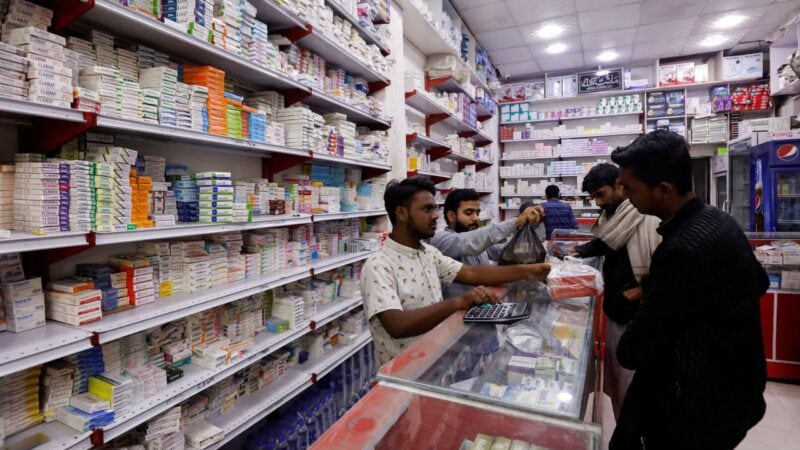
Doctors in Pakistan prescribe an average of 4.2 medicines per patient, more than twice the World Health Organisation’s (WHO) recommended range, while only a quarter of medicines are prescribed by their generic names, according to a new study.
The findings are based on a review of 15 studies covering hospitals and clinics in Punjab, Khyber Pakhtunkhwa, Sindh, Balochistan and Islamabad between 2013 and 2024.
Researchers from the Health Services Academy (HSA), Islamabad, published the review in Discover Public Health.
WHO recommends 1.6 to 1.8 medicines per prescription. The review found that prescribing was substantially higher across the studies, with one tertiary hospital in Peshawar recording an average of 10.56 medicines per prescription.
Even the lowest average identified, recorded at an emergency department in Bahawalpur, was above the WHO benchmark.
The review also found widespread use of brand names instead of generic drug names. Only around 25 percent of medicines were prescribed generically, against a WHO target of 100 percent.
Generic prescribing exceeded 50 percent in only two of the 15 studies and was close to zero at some hospitals.
Antibiotics were included in 45 percent of prescriptions on average, compared with a WHO recommended range of 20 percent to 26.8 percent.
Injections were used in more than 27 percent of prescriptions, above the WHO range of 13.4 percent to 24 percent, although their use varied from zero to 98 percent between facilities.
Only 72 percent of prescribed medicines were from Pakistan’s essential medicines list, which the WHO recommends should account for all prescriptions.
Prof Shahzad Ali Khan, HSA vice chancellor and a study author, said the problem was not confined to particular hospitals or cities.
“This is not the problem of one hospital or one city. It is happening across the country, at every level of healthcare,” Khan said.
He said patient demand, limited consultation time and pharmaceutical marketing contributed to excessive prescribing. Patients often believed antibiotics and injections would provide faster treatment, he added.
The findings come amid growing concern over antimicrobial resistance, in which infections become harder to treat as medicines lose their effectiveness.
Federal health authorities have estimated that resistance to priority bacteria and fungi could cause more than 262,000 deaths in Pakistan over the next 25 years.





