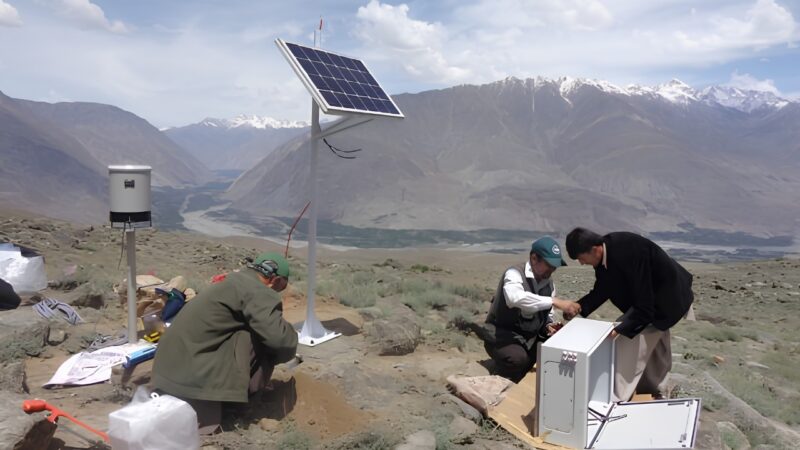
Pakistan is expanding its flood preparedness network in the mountainous north, with 286 early warning systems being installed across vulnerable areas of Gilgit-Baltistan and Khyber Pakhtunkhwa under a $37 million climate adaptation project.
The systems will cover 24 valleys, 18 in Gilgit-Baltistan and six in Khyber Pakhtunkhwa, according to a government document.
The project, known as GLOF-II, is intended to help communities respond to glacial lake outburst floods, or sudden releases of water from lakes formed by melting glaciers, as well as other climate-related hazards.
The initiative comes as Pakistan faces increasingly unpredictable weather patterns. The country has experienced heatwaves, droughts, cyclones, intense rainfall and record flooding in recent years.
Heavy monsoon rains and floods have already killed at least 155 people and injured more than 460 since the season began in June, according to figures released by the National Disaster Management Authority.
The $37 million initiative is being financed by the United Nations Adaptation Fund.
It follows the first phase of the GLOF programme, which operated from 2011 to 2016 and focused on protecting communities in Gilgit-Baltistan and Chitral from glacial flooding.
Pakistan’s exposure to climate-related disasters has been underscored by repeated major floods.
Last year’s monsoon rains and flooding killed more than 1,000 people and damaged homes, roads, farmland and public infrastructure, with Punjab among the worst-affected areas.
The country’s vulnerability was highlighted by the devastating floods of 2022, when record monsoon rains and glacial melt killed more than 1,700 people, affected over 33 million and caused an estimated $30 billion in economic losses.