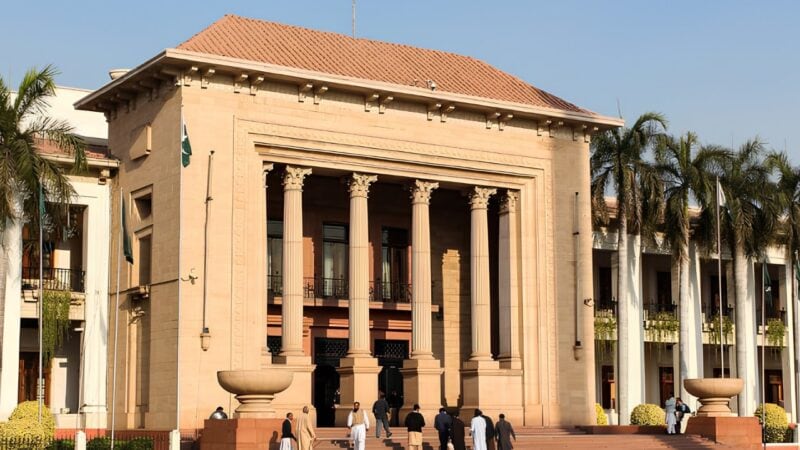
The Punjab Assembly has passed the Punjab Anti-Terrorism (Amendment) Bill 2026, which provides for confidential proceedings in designated terrorism cases, including keeping the identities of judges, prosecutors, defence lawyers and witnesses secret.
The legislation, approved on Monday amid strong opposition, slogans and a walkout by opposition lawmakers, would allow certain terrorism cases to be placed on a separate “special security case” track.
Under the proposed mechanism, a designated Grade-20 or equivalent government officer could seek the classification of a case as requiring extraordinary protection.
The bill would also permit the use of coded identities for witnesses, conceal the names of judges and lawyers, allow voices to be altered and provide for proceedings through secure video links, including from prisons.
The legislation has drawn sharp criticism from opposition lawmakers, who argue that the provisions could undermine the constitutional right to a fair trial and give excessive authority to the executive.
During Monday’s session, Speaker Malik Muhammad Ahmad Khan and Opposition Leader Moin Riaz Qureshi clashed over the bill’s constitutional and legal implications.
Speaker Khan ruled that the legislation could legally be placed on the agenda, citing Article 142 of the Constitution, which sets out legislative powers including jurisdiction over criminal law.
Defending the bill, the speaker recalled the scale of terrorism in Pakistan during the 1990s and said more than 100,000 people had been killed.
He said terrorists had previously escaped prosecution because of inadequate witness protection and physical security.
Qureshi described the bill as “draconian” and a “bill to crush the citizens of Punjab”. He alleged that it could be used against political opponents, particularly PTI leaders and activists.
Opposition lawmaker Ahmar Rashid Bhatti warned that concealing the identities and altering the voices of judges, prosecutors, defence lawyers and witnesses could violate Article 10-A, which guarantees the right to a fair trial.
Opposition members later chanted slogans and walked out. PTI MPA Waqas Mann raised a quorum objection, but treasury lawmakers secured sufficient numbers to continue the session.
With the opposition absent, its proposed amendments were rejected and the bill was passed.





