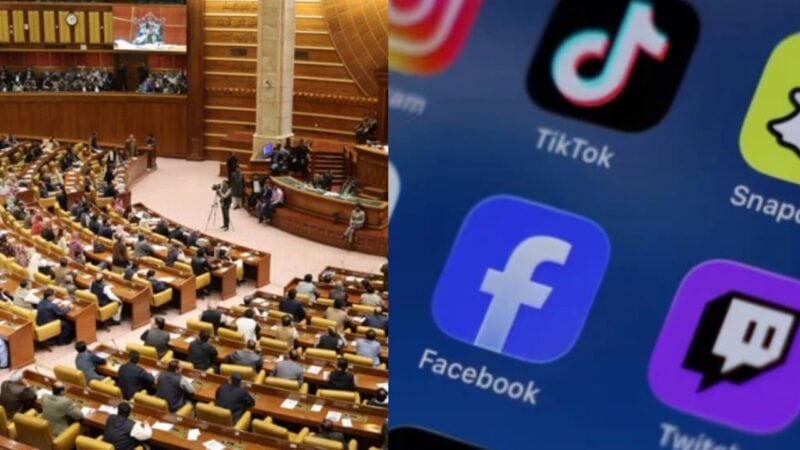
The Punjab Assembly has passed a resolution calling for a legal ban on social media accounts for children under 16.
The resolution, submitted in July by Child Protection Bureau chairperson Sarah Ahmad, called for legislation and coordination between federal and provincial institutions to protect children from risks linked to social media use.
The resolution highlighted cyberbullying, online sexual exploitation, inappropriate content and mental stress among the risks children face on social media.
It also referred to restrictions introduced in Australia, France, China and several United States (US) states to regulate children’s access to social media. It urged the government to introduce similar legal safeguards in Pakistan.
The resolution comes as several countries move towards stricter rules for children’s access to social media. Australia and the EU have introduced or considered age-based restrictions, while other governments are looking at stronger age verification and online safety measures.
The resolution will serve as a recommendation to the federal government as telecommunications, internet regulation and digital platforms fall under its legislative authority.
Meanwhile, the Punjab Assembly also passed a resolution seeking equal religious education and examination opportunities for prisoners from minority communities.
Treasury member Raheela Khadim moved the resolution, which the House adopted by majority vote.
It noted that Rule 215 of the Punjab Prison Rules, 1978 allows prisoners to receive remission in their sentences for completing religious education in accordance with the law.
Official data cited in the resolution showed that 2,558 Muslim prisoners received the facility after completing religious education between 2020 and 2025.
The resolution called for the same system to apply to Christian, Hindu, Sikh and other minority prisoners.
It demanded equal opportunities for them to study their respective religious curricula, appear in examinations and receive sentence remission after completing their religious education as provided under the law.





