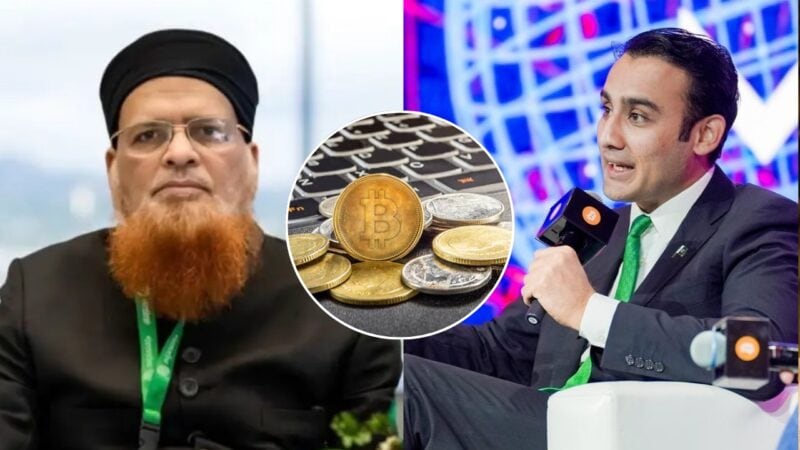
The Pakistan Virtual Assets Regulatory Authority (PVARA) is seeking to establish a dual regulatory and religious evaluation framework for digital currencies. The initiative aims to reconcile the country’s expanding digital economy with Islamic financial principles, focusing on consumer safety and technological assessment.
The push for a specialized review follows a religious decree issued on June 10 by Darul Ifta, Jamia Darululoom in Karachi, which declared cryptocurrency transactions “impermissible”.
Signed by prominent scholar Mufti Taqi Usmani and five other jurists, the fatwa characterized cryptocurrency as “merely the recording of fictitious numbers in an account.”
The edict maintained that digital assets like the Tether stablecoin (USDT) do not constitute “maal” (wealth) under Shariah, rendering transactions such as purchasing educational courses invalid because buyers do not legally acquire ownership.
In response to the restrictions imposed by the decree, State Minister and PVARA Chairman Bilal bin Saqib held a discussion with Mufti Usmani to align state regulatory aims with religious oversight.
According to Saqib, the primary objective of the state framework is “Protecting Pakistanis from fraud, exploitation and financial harm.”
The regulator argued against evaluating digital currencies through a single framework. Saqib stated that “blockchain, digital assets, stablecoins, and tokenised real-world assets represent a broad spectrum of technologies and use cases,” necessitating a “careful technical assessment alongside rigorous Shariah examination.”
The strategy centers on developing ongoing consultation between religious scholars, statutory regulators and technical experts to ensure future policy satisfies both legal and religious conditions.
The government’s regulatory intervention is driven by scale, as an estimated 40 million Pakistanis currently engage with digital assets through unregulated, informal platforms.
PVARA, which operates under a multi-stakeholder board comprising the State Bank of Pakistan (SBP) governor alongside the chairmen of the Securities and Exchange Commission of Pakistan (SECP) and the Federal Board of Revenue (FBR), is mandated to curb these informal channels, counter illicit finance and establish Shariah-compliant financial innovation via regulatory sandboxes.
The legislative groundwork for this economic integration concluded earlier this year through the Virtual Assets Act 2026, which empowered commercial banks to open accounts for licensed virtual asset service providers.
This legislative framework supports the state’s broader economic agenda, which included a December 2025 announcement detailing plans to launch Pakistan’s first sovereign stablecoin to anchor digital tokens directly to physical currency.