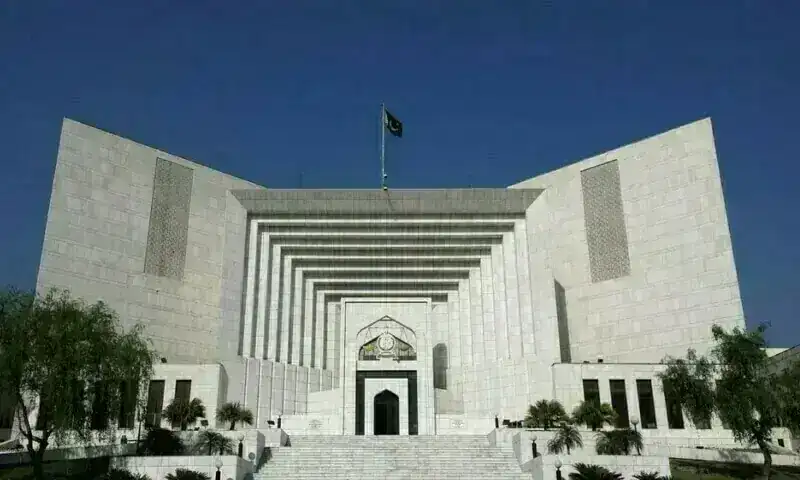
The Supreme Court of Pakistan (SCP) has rejected a Pakistan Bait-ul-Mal (PBM) plea challenging a Sindh High Court order that directed the welfare institution to provide financial support to two Hindu minor girls. PBM is a state-run welfare institution that provides assistance to people facing financial hardship.
A three-member SC bench headed by Chief Justice of Pakistan (CJP) Yahya Afridi and comprising Justice Naeem Akhtar Afghan and Justice Miangul Hassan Aurangzeb upheld the Sindh High Court (SHC) Larkana Circuit Court’s December 1, 2022 order.
The order requires PBM to register the two girls as beneficiaries and pay each of them Rs10,000 per month, with a 10 percent annual increase, until their marriage.
While the SC acknowledged the high court’s concern for the welfare of the minors, it also set out a framework for similar cases in the future.
The court said that when circumstances presented before a court appear to justify assistance from PBM, the case should be referred to the institution for consideration. PBM can then assess the applicant’s circumstances under its policy and eligibility criteria before deciding the extent of assistance.
“This course allows the concerned court to bring a deserving case within the reach of the welfare institution established to respond to it, without displacing the structure through which the PBM is required to administer its assistance,” the court observed.
The case originated from a maintenance dispute involving Shrimati Reeta, a Hindu woman who married Ravi Kumar in 2012. The couple had two daughters, Jasika and Sanika. Ravi Kumar commited suicide on May 20, 2017.
After his death, Reeta had no independent source of income to support herself and her daughters. She approached a family court in Jacobabad and sought maintenance for the minors from their paternal grandfather Ram Raj.
Ram Raj, however, who was also aged and infirm, had no source of income or residence of his own and was living in a dharamshala (charitable shelter).
The family court nevertheless ordered Ram Raj to pay Rs3,000 per month for each child, along with a 10 percent annual increase. An appeal upheld the order, prompting Ram Raj to approach the SHC under its constitutional jurisdiction.
The SHC held that Ram Raj was not personally responsible for the children’s maintenance under the applicable family law. At the same time, it directed PBM to register Jasika and Sanika as regular beneficiaries and provide them monthly maintenance.
The judgement noted that the girls’ mother was a widow without an independent source of income, while their paternal grandfather was aged, infirm and living in destitute conditions.
It also noted that the children belonged to a religious minority and said that their minority status formed an important part of the wider circumstances in which their need for support had to be considered.





