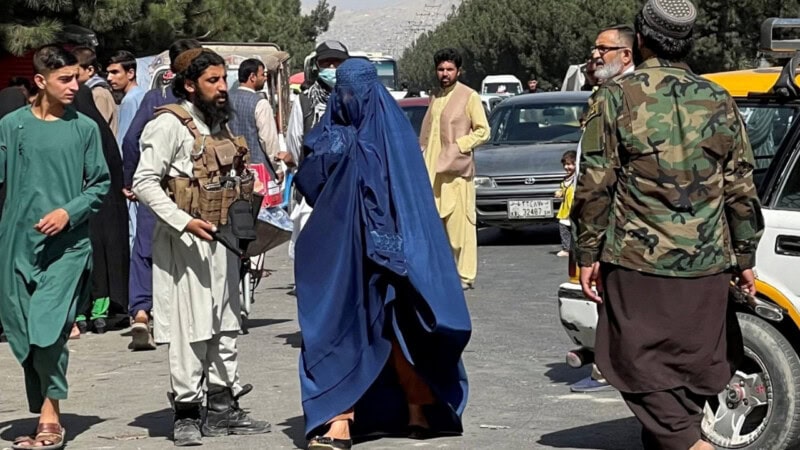
The Afghan Taliban have introduced a penal code that permits a husband to strike his wife and children, provided the violence does not result in broken bones or open wounds. A 60-page document, obtained by a British newspaper, has been signed by the Taliban’s supreme leader Hibatullah Akhundzada and circulated to courts across Afghanistan.
Under the code, spousal beatings are classified as “ta’zir”, meaning discretionary punishment, rather than a criminal offence. A husband may use physical force against his wife as long as injuries do not meet the threshold outlined in the law. Where injuries can be proven, the maximum penalty available to judges is 15 days in prison.
Article 32 states: “If a husband strikes his wife (the complainant) with severe force (resulting in broken bone, wound, or visible bruising on the body), and the complainant proves her case before the judge, the husband is guilty – the judge shall sentence him to fifteen days of imprisonment.”
To file a complaint, a woman must appear before a male judge, remain fully veiled and be accompanied by a male guardian. In most domestic violence cases, that guardian is the husband accused of carrying out the beating. The code contains no clause prohibiting physical, psychological or sexual violence against women.
The law also addresses women who attempt to leave abusive situations. Article 34 states that a woman who goes to her parents’ home without her husband’s permission faces up to three months in prison. The same sentence applies to family members who shelter her, even if she fled violence.
The penal code removes the legal framework established under Afghanistan’s previous government, including a 2009 law that criminalised forced marriage, rape and gender-based violence, with prison sentences ranging from three months to one year.
The code separates Afghan society into four tiers under Article 9: religious scholars, elites, middle class and lower class. The same offence results in different outcomes depending on social status, ranging from advice to imprisonment and corporal punishment.
The document provides no right to legal representation and removes appeal mechanisms, leaving judicial outcomes to the discretion of Taliban judges.
Teachers are permitted to physically punish children, with only injuries such as broken bones or torn skin defined as excess. Article 48 allows fathers to physically punish sons from the age of 10, describing the action as serving the child’s interest.
The Taliban has ruled that discussing the penal code itself constitutes a criminal offence.
Narges, a former university student from Herat, told the newspaper, “The world has always shown its unjust side to us. I do not feel like I am living, and this feeling is shared by everyone I know.” She said: “This new law is not just a law – it is making our bodies their field of control. No one would see our pain unless our bones are broken.”
Since returning to power in August 2021, the Taliban has imposed restrictions on women affecting movement, dress, education, speech and interaction with men.