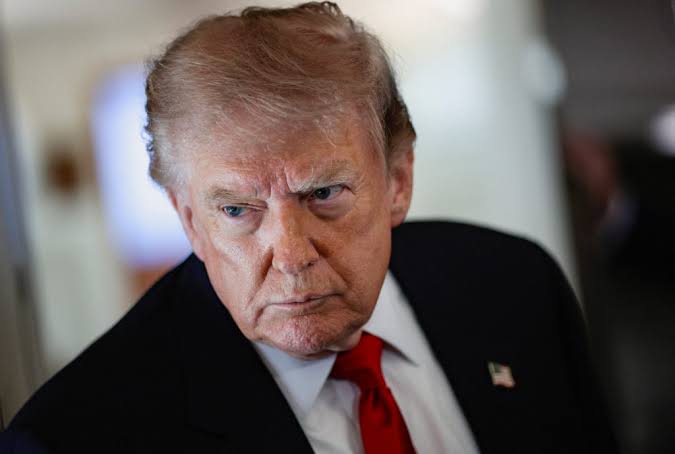
President of the United States (US) Donald Trump has said that Washington and Tehran are holding talks during a pause in military strikes, as regional actors move to address security in the Strait of Hormuz and counter drone threats.
“Their people said, ‘Please don’t shoot’ last night, the night before … ‘Don’t do it, we’re having good talks,'” Trump told reporters. “I think there’s a good chance that something could happen, and if it doesn’t, we go back to doing what we were doing two days ago.”
Trump added that he and Israeli Prime Minister Benjamin Netanyahu are “pretty close” on Iran policy.
In Amman, Jordan’s Foreign Minister Ayman Safadi and United Nations (UN) Secretary-General Antonio Guterres discussed escalation in the region and efforts to restore security.
A statement from Jordan said that the two “affirmed the importance of committing to the ceasefire between the United States and Iran, and resuming negotiations to reach a comprehensive solution that addresses all causes of tension and ensures freedom of navigation in the Strait of Hormuz in accordance with international law.”
Meanwhile, Oman presented a proposal to Iran for a mechanism to manage the Strait of Hormuz with fees and countries in the region back the proposal, according to the reports.
Iran’s Foreign Minister Abbas Araqchi spoke by phone with his Saudi and Omani counterparts regarding security in the Strait of Hormuz.
A statement on Araqchi’s Telegram channel noted that he “discussed the latest bilateral and regional developments, and emphasised the need to strengthen cooperation and advance joint diplomatic efforts to establish stability in the region.”
The phone call between Araqchi and Saudi Foreign Minister Faisal bin Farhan followed statements from Saudi Arabia that it shot down drones launched toward the kingdom by groups in Iraq.
At least 624 US service members have been injured since Trump ordered strikes against Iran in February, according to Pentagon updates from July 25.
The total includes 417 casualties from Operation Epic Fury and 207 from overseas operations. Although Washington and Tehran agreed to a ceasefire in April and signed a Memorandum of Understanding (MoU) in June, military strikes are still going on.
At sea, United States Central Command (CENTOM) redirected 17 vessels, disabled two vessels, and boarded two others while enforcing a blockade of ports in Iran.
In Yemen, foreign minister designate Afrah al-Zouba warned that Houthi forces seek to replicate actions in the Strait of Hormuz following their announcement of a blockade against Saudi Arabia. “The Houthis want to copy the Iran experience in Hormuz,” al-Zouba said, adding that the group acts “in harmony” with escalation from Iran.
Jordan’s Armed Forces shot down a drone in the eastern desert after the aircraft entered Jordanian airspace at dawn.
Addressing Houthi actions, Trump noted that Washington deals with Saudi Arabia and may act if the group creates issues. Trump added that the US previously struck Houthi positions in Yemen and “didn’t have any problem with them after that.”
Trump also stated he will ask Russian President Vladimir Putin whether satellite systems from Russia assist Tehran with strikes. “I’ll ask Putin about it. We’ll find out,” Trump told reporters.





