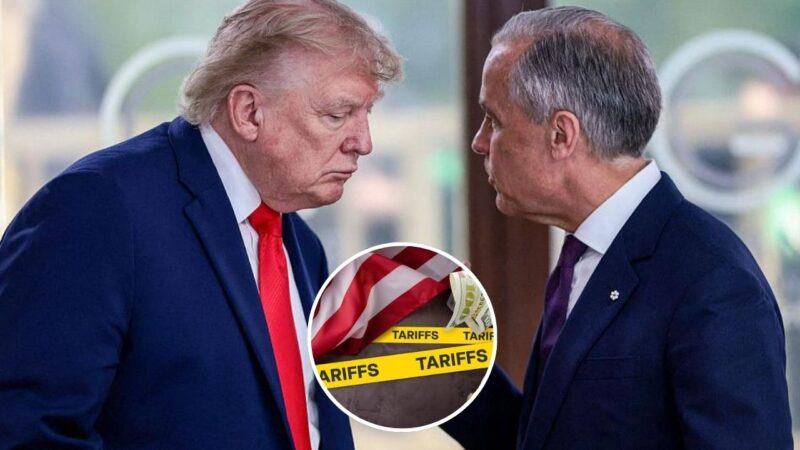
The United States (US) President Donald Trump has imposed a steep 50 percent tariff on a wide range of goods imported from Canada, citing “unequal treatment” of American cars, dairy, and alcohol.
The White House stated that the duties apply to all covered goods regardless of whether the product was included under the existing free trade agreement between Canada, the US, and Mexico, known as the USMCA. The administration invoked Section 338 of the 1930 Tariff Act, focusing on trade discrimination.
Everyday consumer items like wine and hockey sticks, alongside industrial products such as cement, are among the targeted goods. However, several key exports are spared from the new tax, including energy, potash, critical minerals, and fish.
Canadian Prime Minister Mark Carney responded by stating that Canada stands ready to “intensify” trade talks in the coming week.
In a statement on X, he criticized the unilateral actions of United States (US), stating: “This is the latest in a series of unilateral US trade actions that began with the US imposing a series of tariffs in direct violation of the Canada-United States-Mexico Agreement USMCA”
He wrote about “threats to Canadian sovereignty, provinces, territories,” a possible reference to Trump’s calls to make America’s northern neighbour the 51st US state.
The disputes stem from longstanding disagreements over automotive taxes, Canada’s dairy supply management system, and the provincial boycott of US alcoholic drinks. Canadian officials have maintained that the boycott will be lifted if the US removes its tariffs on key Canadian sectors like metals and automobiles.
Earlier in the year US chose not to renew the free trade agreement USMCA with American neighbours in its current form. While Canada and Mexico have sought a renewal, Trump administration has maintained its firm stance on the proposition of changes.





