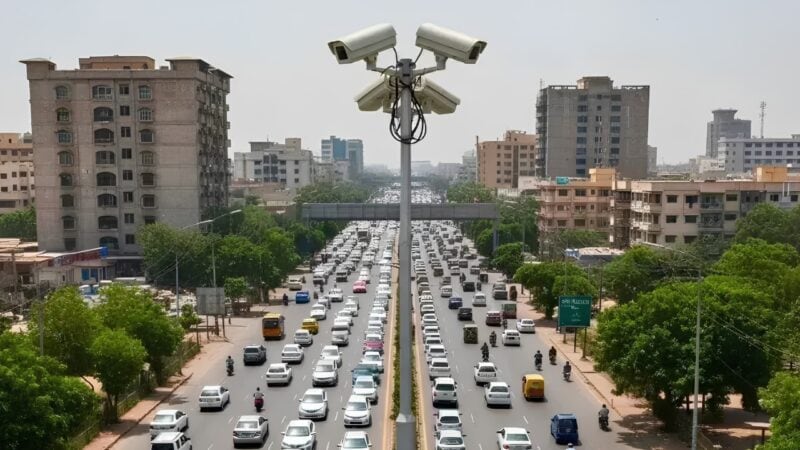
A proposal by Lahore’s Chief Traffic Officer (CTO) Syed Abdul Raheem Shirazi to link unpaid digital traffic challans to essential public services, including CNICs, passports and vehicle transfers, is set to face a legal challenge in the Lahore High Court.
The proposal recommends making certain services at Police Khidmat Markaz conditional on the clearance of outstanding e-challan payments.
These include duplicate CNIC issuance, passport renewal, vehicle sale and purchase transactions and selected police services.
A formal communication has been sent to Punjab DIG Traffic and the Punjab Information Technology Department (PITB), according to a spokesperson for City Traffic Police.
The spokesperson said that the proposed mechanism was intended to improve recovery of unpaid e-challans and reduce administrative costs associated with pursuing defaulters.
He added that faster recovery could also help expedite cases pending before courts.
However, senior lawyer Omais Younis described the proposal as legally unsustainable, arguing that authorities cannot restrict citizens’ access to unrelated state services solely to recover disputed traffic fines.
He said that the Supreme Court had previously ruled that even a court executing a money decree could not block a person’s CNIC unless the law specifically authorised such action.
Referring to a Supreme Court judgment issued on February 18, 2026, Younis pointed out that Section 51 of the Code of Civil Procedure sets out recognised methods for enforcing a money decree but does not empower courts to block CNICs.
He also invoked Article 10-A of the Constitution, which guarantees fair trial and due process in determining civil rights and obligations and criminal accusations.
“A digital challan begins as an allegation; it is not necessarily a final adjudication merely because it appears in a government database,” Younis remarked.
He argued that restricting access to a CNIC or passport could have wider consequences for a citizen’s legal, economic and social affairs.
Younis said his law firm was preparing to challenge what he described as an “unlawful and unconstitutional” executive proposal before the Lahore High Court, arguing that citizens’ legal rights must be protected.





