The United States (US) and Iran have negotiated a 60-day extension plan for their current ceasefire following a series of military exchanges.
The memorandum of understanding (MoU) that awaits a final approval from US President Donald Trump outlines a framework to address Iran’s stockpile of highly enriched uranium, which reports indicate will be a priority during the 60-day window.
Following the development, global oil prices fell due to expectations that the Strait of Hormuz, a transit route for a fifth of the world’s oil and liquefied natural gas, might reopen.
The development follows a series of recent strikes that disrupted the early-April truce.
The conflict, which began on February 28 after US and Israeli strikes on Iran, has lasted three months and resulted in thousands of casualties.
The latest escalation involved a US Central Command operation that shot down five Iranian attack drones and targeted a ground control station in Bandar Abbas. A US official said the actions were “measured, purely defensive and intended to maintain the ceasefire”.
In response, Iran launched a ballistic missile toward a US base in Kuwait. The Islamic Revolutionary Guard Corps (IRGC) announced it targeted the base responsible for the Bandar Abbas strikes, warning that any repetition would prompt a “more decisive response”.
Kuwaiti forces intercepted the missile, and the Kuwaiti government condemned the incident, demanding that Iran “immediately halt what it called a serious escalation”.
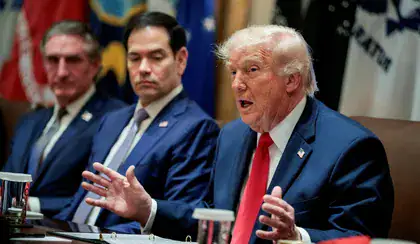
President Trump has stated many times that the end of the war is close, but noted during a cabinet meeting on Wednesday that he remains unsatisfied with the current negotiations.
He confirmed that the US is not considering easing sanctions, rejecting a primary demand from Tehran.